
Metal Roof Noise: Will Rain Make It Louder Indoors?
Understanding Metal Roof Noise: What Really Happens When It Rains
What is “metal roof noise” and why do homeowners worry about it?
When people search for Metal Roof Noise, they are usually asking one simple question: will I hear every drop of rain inside my house?
Metal roof noise refers to the sound created when rain, hail, wind, or thermal movement interacts with metal roofing panels. The most common concern is rain noise, but homeowners also report popping, creaking, or banging during temperature swings and storms.
I have found that the fear often comes from experience with old barns, sheds, or carports. Those structures typically had exposed metal panels installed directly over open framing, with no insulation and no solid roof deck. Of course they were loud. There was nothing to absorb or dampen sound.
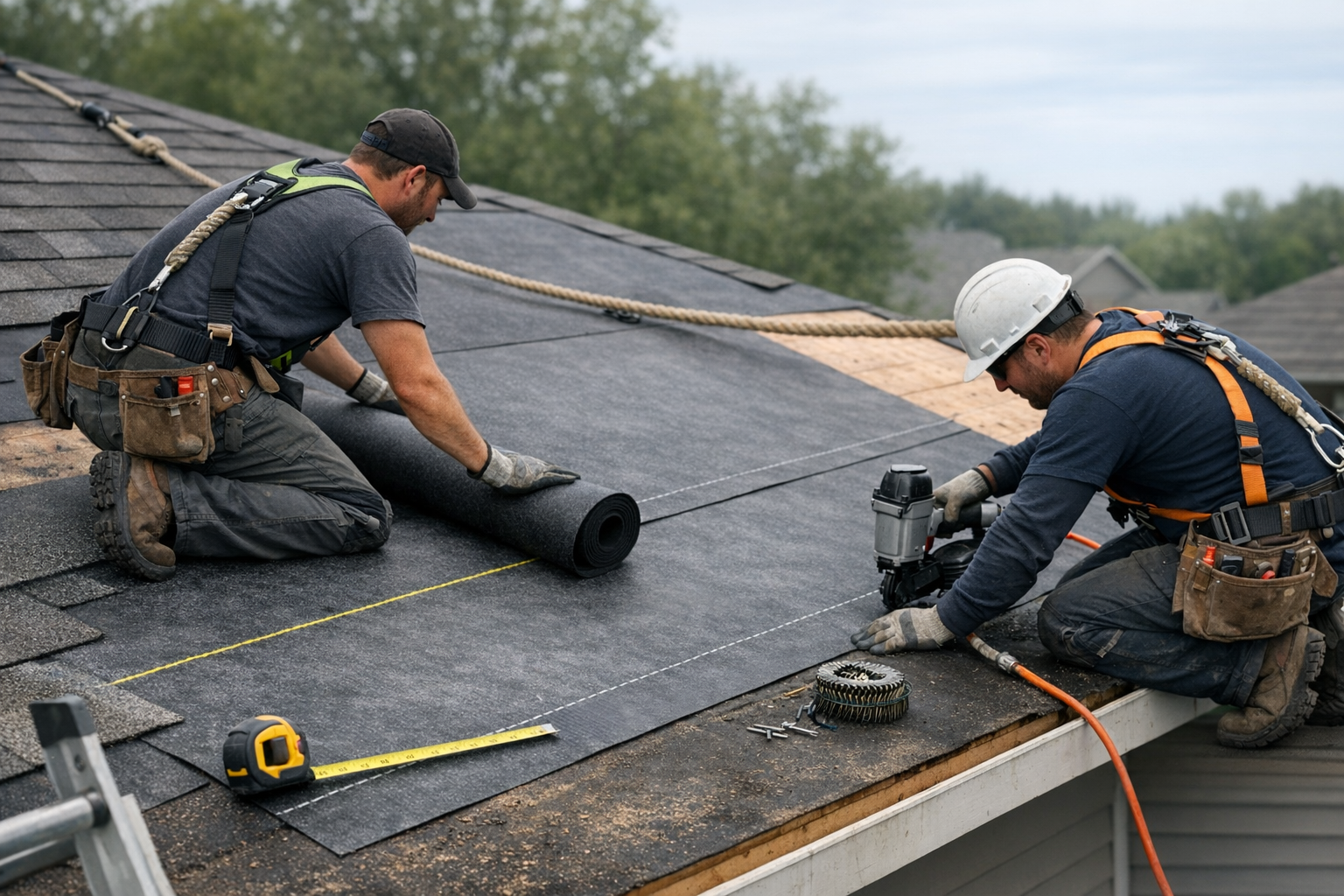
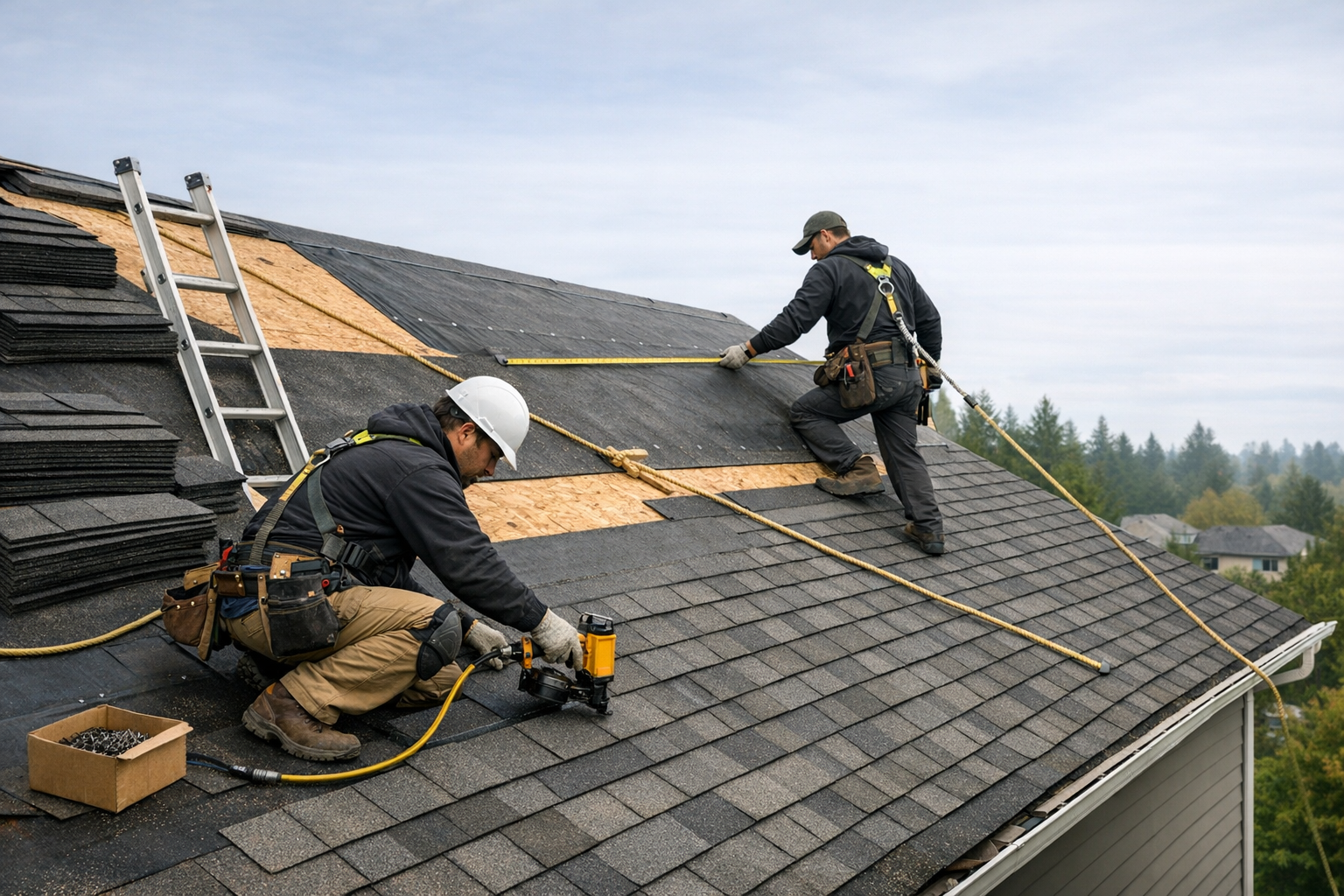
In a modern home, the situation is very different. A properly installed residential metal roof includes decking, underlayment, insulation, attic space, and finished ceilings. Each of these layers plays a role in controlling metal roof noise. The concern is understandable, but it is often based on outdated examples rather than current building practices.
How sound actually travels through a metal roof system
To understand metal roof noise, it helps to understand basic sound transmission. Sound travels as vibration. When rain hits a metal panel, it creates vibration in that panel. That vibration can transfer through the roof assembly and into the interior of the home.
In a typical residential system, the sound path looks like this:
- Rain impacts the metal panel.
- The panel vibrates slightly.
- The vibration transfers to the roof deck.
- Insulation and air cavities absorb part of the sound.
- Drywall and ceiling materials further reduce the noise.
Each layer reduces the intensity. This is why most homeowners are surprised after installation. They expect dramatic noise and instead hear a muted, steady rainfall that is comparable to other roofing materials.
In my experience, the biggest difference between loud and quiet systems is not the metal itself. It is what sits underneath it.
Common myths about noisy metal roofs (and where they came from)
One of the most common myths is that metal roofs are automatically louder than asphalt shingles. That idea largely comes from agricultural buildings and older construction methods.
Another myth is that thicker metal always means less noise. While panel thickness can influence vibration slightly, it is only one small factor. Without proper underlayment and insulation, even thick panels can transmit noticeable sound.
A third misconception is that rain on metal will “echo” inside the house. Echo requires a large, reflective interior space. Most homes have furniture, drywall, insulation, and soft finishes that absorb sound effectively.
These myths persist because they are simple and easy to repeat. The reality is more nuanced. Metal roof noise depends on the entire roof assembly, not just the material on top.
Factors that influence how loud a metal roof sounds indoors
Several factors determine whether metal roof noise will be noticeable:
- Roof deck type, such as plywood or OSB
- Underlayment material and thickness
- Attic insulation levels
- Ceiling construction
- Panel profile and fastening system
- Installation quality
For example, a standing seam metal roof installed over solid decking with high-quality synthetic underlayment and a well-insulated attic will sound very different from corrugated panels installed over open purlins.
When I evaluate concerns about metal roof noise, I always look at the full assembly. That holistic approach gives a much clearer picture than focusing on the metal alone.
Will Rain Make a Metal Roof Louder Indoors?
Light rain vs. heavy rain vs. hail: how each affects perceived noise
Light rain on a metal roof often produces a soft, consistent sound. Many homeowners describe it as similar to white noise. Because the drops are small, the impact energy is low, which means less vibration.
Heavy rain increases impact force and frequency. You may hear a more noticeable drumming during intense storms. However, in a well-insulated home, it is rarely overwhelming.
Hail is different. Hailstones create sharp, high-energy impacts that can be loud on any roofing material. Metal, asphalt, and tile all produce distinct sounds during hailstorms. The difference is often more about pitch than volume.
In practical terms, if your home is properly insulated, everyday rain should not make your metal roof dramatically louder indoors than other common roofing materials.
Indoors vs. outdoors: what you hear inside is not what you hear on top
If you stand outside during a rainstorm and listen to rain hitting a metal roof, it sounds loud. That is because you are hearing direct impact with no barriers.
Inside the home, multiple layers separate you from that impact. Decking, underlayment, insulation, attic air space, and drywall all act as sound buffers.
I often explain it this way: what you hear outside is raw impact noise. What you hear inside is filtered noise. The difference can be significant.
This is why homeowners who worry about metal roof noise before installation are often surprised by how moderate it sounds once they are living under it.
How metal roof design today differs from old barn and shed roofs
Older barn roofs were typically installed:
- Directly over open framing
- Without sheathing
- Without underlayment
- Without insulation
- Without finished ceilings
That design maximizes metal roof noise. There is almost nothing to interrupt sound transmission.
Modern residential systems include solid decking and building code-required insulation levels. Many also use advanced underlayments designed for moisture and sound control.
When someone tells me they are worried because they remember rain on their grandfather’s barn, I gently explain that today’s roof assemblies are completely different in design and performance.
Comparing metal roof noise to asphalt shingles, tile, and slate
In laboratory testing, properly installed metal roofing over solid decking performs similarly to asphalt shingles in terms of interior sound levels.
Tile and slate are heavy materials, so they naturally dampen impact sound. However, they are also installed over decking and underlayment. The total assembly matters more than the surface material alone.
From a homeowner perspective, the difference in metal roof noise compared to shingles is often minimal when both are installed correctly. The perception gap is larger than the actual acoustic difference.
Key Components That Affect Metal Roof Noise Levels
Roof deck and sheathing: the first line of sound control
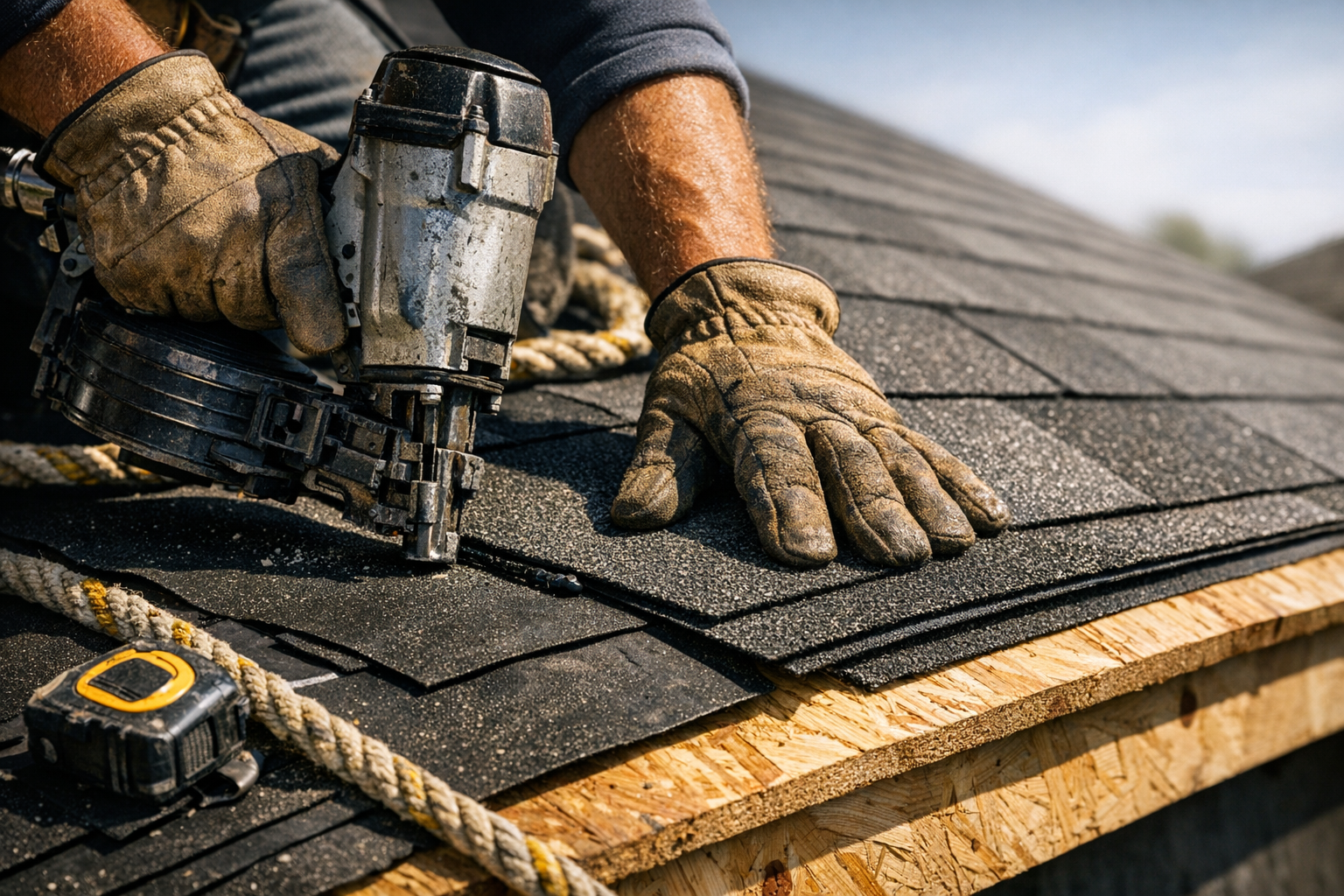
The roof deck is the structural base, usually plywood or oriented strand board. It provides a solid surface beneath the metal panels.
A solid deck significantly reduces vibration compared to open framing. It spreads impact energy across a wider area, lowering the intensity of sound transmission.
In my assessments, homes with direct-to-deck metal installations are consistently quieter than those with exposed fastener panels over purlins. If noise control is a priority, solid sheathing is essential.
Underlayment materials and their impact on sound absorption
Underlayment sits between the metal panel and the roof deck. While its primary role is moisture protection, it also contributes to sound control.
Thicker synthetic underlayments and specialized sound-dampening membranes can reduce metal roof noise by absorbing vibration before it reaches the deck.
Some systems include peel-and-stick membranes that create a more continuous bond. This can limit panel movement and reduce rattling during wind events.
Choosing the right underlayment is a small decision that can have a noticeable impact on indoor comfort.
Insulation types and noise reduction
Insulation plays a major role in reducing metal roof rain noise. Common options include:
- Fiberglass batts
- Blown-in cellulose
- Spray foam
- Rigid foam boards
Fiberglass and cellulose absorb airborne sound within attic cavities. Spray foam adds both insulation and air sealing, which can further limit sound transmission. Rigid foam above the deck can also reduce vibration transfer.
If I want to dramatically reduce perceived metal roof noise, I focus first on insulation depth and coverage. A well-insulated attic often makes more difference than panel thickness.
Fastening systems: exposed vs. concealed fasteners and vibration
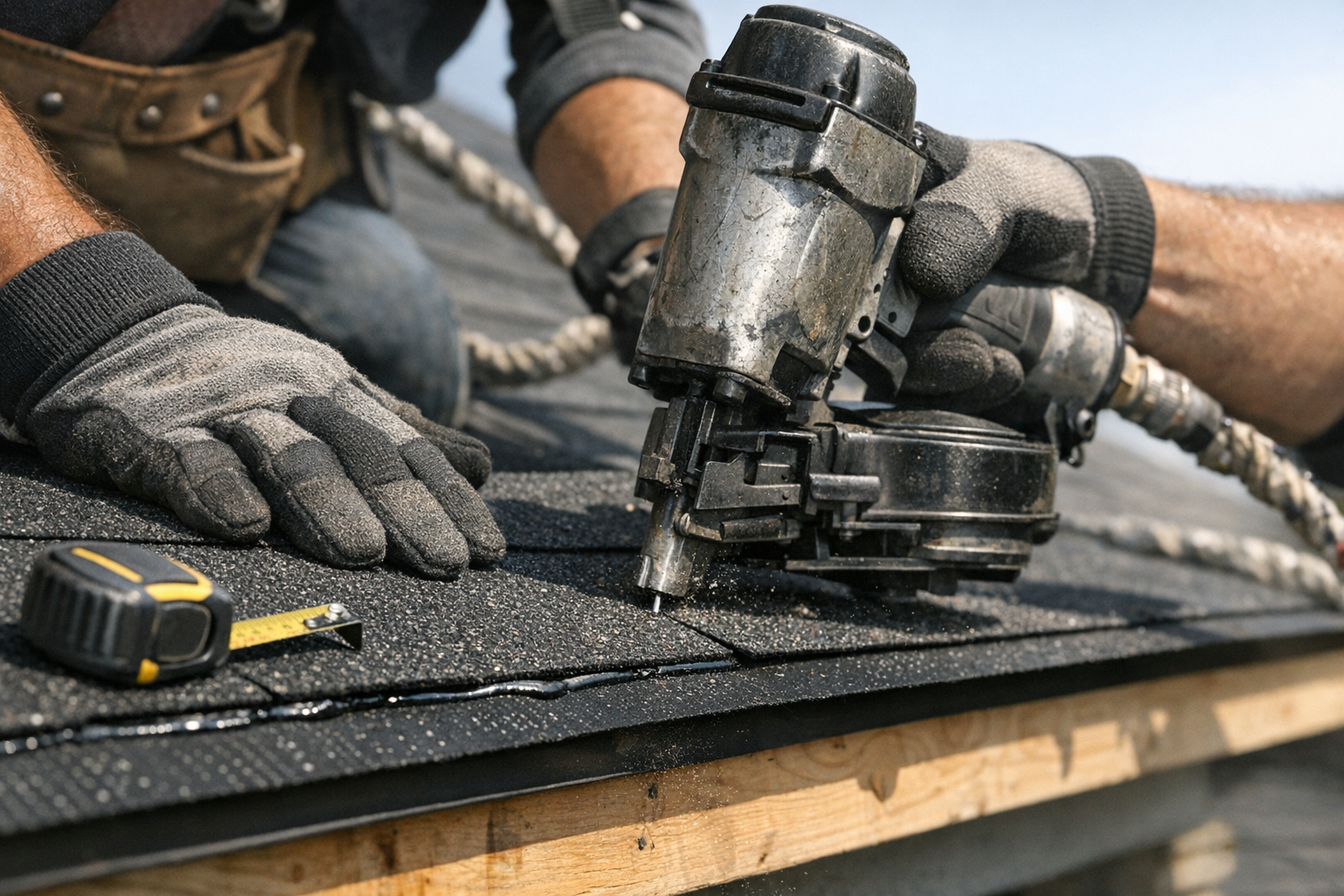
Exposed fastener systems use screws that go directly through the panel surface. Over time, if fasteners loosen, panels can vibrate more.
Concealed fastener systems, such as standing seam metal roofs, secure panels with hidden clips. This allows controlled movement for thermal expansion and can reduce stress-related noise.
While both systems can perform well, concealed fastener designs generally offer better long-term control of vibration and expansion-related sounds.
Roof slope, panel length, and profile shape
Steeper slopes allow rain to run off quickly, reducing prolonged impact in one area. Panel length can influence how vibration travels across the surface.
Profile shape matters too. Standing seam panels are typically flatter with raised seams, while corrugated panels have repeating ridges. Each profile distributes impact differently.
In practice, the combination of solid decking, quality underlayment, and proper fastening has a greater impact on metal roof noise than profile alone. Still, panel design should be considered as part of the overall system.
Why Some Metal Roofs Are Quiet and Others Are Noisy
Installation quality and amplified sound
Poor installation is one of the biggest contributors to excessive metal roof noise. Loose fasteners, improper clip spacing, or gaps between components allow panels to move more than intended.
Movement increases vibration. Vibration increases sound.
I have inspected roofs where a simple adjustment, such as tightening fasteners or correcting panel alignment, significantly reduced banging during windstorms. Craftsmanship matters just as much as material choice.
Attic condition and air sealing
An empty attic with minimal insulation acts like a sound chamber. Noise can bounce within the cavity before reaching the ceiling.
A well-insulated and properly air-sealed attic absorbs and blocks much of that sound. Even adding blown-in insulation to reach recommended R-values can noticeably reduce metal roof rain noise.
If your roof seems loud, I often recommend evaluating attic insulation before assuming the metal is the problem.
Ceiling construction and interior finishes
Drywall thickness, resilient channels, and acoustic panels can all influence interior sound levels.
A single layer of thin drywall transmits more sound than a multi-layer ceiling assembly. Homes with vaulted ceilings and limited attic space may notice more direct sound transfer.
Interior finishes matter too. Carpet, furniture, and fabric absorb sound, while hard surfaces reflect it. Room design can change how metal roof noise is perceived.
Home structure and building standards
Older homes often lack modern insulation standards and air sealing techniques. This can make any roof seem louder.
New builds constructed to current codes usually include better thermal and acoustic control. As a result, metal roof noise in newer homes is often less noticeable.
The roof does not exist in isolation. The entire building envelope influences acoustic performance.
Environmental factors and surroundings
Wind direction, nearby trees, and surrounding hard surfaces can affect how sound behaves around your home.
For example, overhanging branches can amplify the sound of rain before it even reaches the roof. Nearby walls or neighboring buildings can reflect sound waves.
When diagnosing metal roof noise, I consider the environment as well as the structure. Sometimes the solution is not on the roof at all.
How to Reduce Metal Roof Noise in New Construction
Planning for a quiet metal roof during the design phase
The best time to address metal roof noise is before installation. During design, I recommend evaluating roof assembly layers as a complete system.
This includes selecting solid decking, high-quality underlayment, and sufficient insulation. Early planning prevents costly retrofits later.
Noise control should be part of the specification, not an afterthought.
Choosing low-noise panels and profiles
Standing seam panels with concealed fasteners are often a good choice for homeowners sensitive to sound. Thicker gauge metal can also reduce vibration slightly.
Panel coatings and textured finishes may help diffuse impact energy. While not a primary sound barrier, they can contribute to overall performance.
The key is matching panel design to your comfort expectations and climate conditions.
Best underlayment options for sound control
Sound-dampening membranes and high-density synthetic underlayments add an extra buffer layer.
In some designs, self-adhering membranes create a tighter bond between panel and deck, limiting movement.
When metal roof noise is a major concern, I prioritize underlayment upgrades because they offer meaningful improvement at a moderate cost.
Insulation strategies that cut rain and hail noise
Increasing attic insulation depth is one of the most cost-effective ways to reduce noise.
Spray foam applied to the underside of the roof deck can significantly limit sound transmission. Blown-in cellulose can also add mass and absorption.
If your goal is a noticeably quieter home during storms, insulation should be central to your plan.
Working with your roofer to specify quieter assemblies
Be direct about your expectations. Ask how the proposed assembly addresses sound control.
Request details about decking, underlayment, fastening systems, and insulation levels. A clear specification ensures everyone understands the goal.
In my experience, transparent communication prevents disappointment later.
How to Make an Existing Metal Roof Quieter
Diagnosing the source of metal roof noise
Before making upgrades, identify where the sound originates. Is it rain impact, wind vibration, or thermal expansion?
Check the attic during daylight for loose panels, gaps, or insufficient insulation. Listen during different weather conditions to narrow down patterns.
Accurate diagnosis leads to targeted solutions instead of guesswork.
Upgrading attic insulation
Adding blown-in insulation is often the simplest and most effective improvement.
Bringing attic insulation up to current recommended levels can reduce both heat loss and metal roof rain noise.
This upgrade improves comfort year-round, not just during storms.
Adding sound-dampening underlayment during reroof
If you are planning a reroof, consider installing upgraded underlayment at that time.
Removing panels provides access to improve the assembly without major interior disruption.
It is far more cost-effective to address metal roof noise during scheduled replacement than as a standalone project.
Sealing gaps and tightening fasteners
Loose fasteners can allow panel movement and rattling.
Carefully tightening or replacing worn fasteners can reduce wind-related noise. Always follow safety precautions when working on a roof.
If you are unsure, this is a good time to consult a professional.
Interior improvements and window upgrades
Acoustic ceiling panels, additional drywall layers, and upgraded windows can reduce overall indoor noise levels.
Even adding soft furnishings can slightly change how sound is perceived.
These solutions may not eliminate metal roof noise, but they can make your home feel noticeably quieter.
When to call a roofing professional
If you hear sudden loud banging, repeated popping in one area, or suspect loose panels, professional evaluation is wise.
Roof work involves fall risk and specialized knowledge. When safety or structural performance is in question, expert assessment is the responsible choice.
Metal Roof Noise: When to Be Concerned and When to Relax
Signs your metal roof noise is normal and not a problem
Gentle rain sounds, occasional soft popping during temperature shifts, and mild storm noise are typically normal.
Metal expands and contracts. Light vibration during heavy rain is expected.
If the sound is consistent and not worsening over time, it is usually part of normal performance.
Red-flag noises that may signal issues
Sharp, repeated banging in wind may indicate loose panels. Persistent creaking in one area could suggest fastening problems.
Sudden changes in sound patterns deserve attention, especially if paired with visible movement or leaks.
Unusual metal roof noise should be evaluated before it leads to larger issues.
Simple at-home checks before scheduling an inspection
From the ground, look for visibly lifted panels or missing fasteners.
In the attic, check for daylight gaps or loose insulation.
These basic observations can help determine whether the issue is minor or requires professional repair.
Practical next steps if rain is too loud indoors
If metal roof rain noise feels excessive, start with insulation upgrades and attic air sealing.
Next, evaluate fastening systems and underlayment during any planned roof work.
Most importantly, remember that properly designed and installed systems are not inherently disruptive. In many homes, rain on a metal roof becomes a subtle background sound rather than a nuisance.
Understanding the full assembly and addressing weak points methodically is the path to long-term comfort.
Key Takeaways
- Modern metal roofs, when installed with solid decking, quality underlayment, and sufficient insulation, are not significantly louder indoors during rain than other roofing materials like asphalt shingles.
- Common myths about metal roof noise often stem from outdated construction methods; today’s residential assemblies use multiple sound-dampening layers that drastically reduce interior noise.
- The most effective ways to minimize metal roof noise include upgrading attic insulation, choosing sound-absorbing underlayment, and ensuring high-quality installation with secure fastening systems.
- Noticeable indoor noise is usually a sign of issues such as loose panels, gaps, or insufficient insulation, and these should be addressed methodically for optimal comfort and performance.
- For new construction or reroofing, proactive planning—specifying quiet assemblies and communicating expectations with your roofer—ensures a comfortable, quiet home even during heavy rain or hail.
Frequently Asked Questions
1. Will rain make a metal roof louder indoors compared to other roofs?
No, in a properly installed modern home, rain noise from a metal roof is usually similar to asphalt shingles. Layers like decking, underlayment, and insulation dampen sound, so most homeowners find metal roof noise indoors to be moderate and not disruptive.
2. What factors influence how loud a metal roof sounds inside?
Key factors include the type of roof deck, quality of underlayment, amount of attic insulation, ceiling construction, panel profile, and installation quality. Well-built assemblies with solid decking and proper insulation greatly reduce metal roof noise indoors.
3. How can I make my existing metal roof quieter during rain?
Adding or upgrading attic insulation, sealing gaps, and tightening loose fasteners can noticeably reduce rain noise. For bigger improvements, consider sound-dampening underlayment during a reroof or consult a roofing professional for targeted solutions.
4. Why do some people think metal roofs are always noisy?
This belief often comes from old barns or sheds with exposed metal panels and no insulation. Modern metal roofs on homes are installed over solid decking and insulation, making them much quieter than those outdated structures.
5. When should I be concerned about metal roof noise?
Occasional soft rain sounds or minor popping from temperature changes are normal. However, loud banging, persistent creaking, or sudden changes in noise may signal loose panels or installation issues and should be checked by a roofing professional.
If you want peace of mind and a quieter, more comfortable home, our expert metal roofing services can help you achieve the results you deserve. Do not let concerns about metal roof noise hold you back—contact us to discuss your options and discover how the right roof assembly can transform your living space. Schedule a consultation today and take the first step toward a quieter, worry-free home.