
EPDM Roofing: When Rubber Roofing Is The Right Call
Wondering if an EPDM rubber roof is really the best choice for your flat or low-slope roof—or if a contractor is just upselling you? This article breaks down exactly what EPDM roofing is, how it’s installed, how it compares to TPO and PVC, its real-world pros and cons, and the clear signs you need repair or replacement so you can choose the right flat roof system with confidence.
What Is EPDM Roofing? (And Why Contractors Recommend It for Flat Roofs)
Clear definition: What is an EPDM rubber roof in simple terms?
When someone asks me what EPDM roofing is, I explain it like this: it is a single sheet of durable synthetic rubber designed to waterproof flat and low-slope roofs.
EPDM stands for ethylene ethylene propylene diene monomer. That sounds technical, but what matters is this: it is a flexible rubber membrane that rolls out in large sheets and seals the entire roof surface. Instead of relying on overlapping shingles to shed water, EPDM roofing creates one continuous barrier that keeps water out.
Most EPDM roofs are black, though white options are available. The material typically comes in thicknesses such as 45, 60, or 90 mil. A mil equals one thousandth of an inch. That thickness directly impacts durability and lifespan.
If you picture a flat garage roof or a commercial building with rooftop equipment, chances are you are looking at EPDM roofing or another single-ply membrane. It has been used for decades because it is simple, proven, and cost-effective.
How EPDM fits into the “rubber roofing” family (EPDM vs. TPO vs. PVC)
When people say “rubber roofing,” they usually mean one of three single-ply membranes: EPDM, TPO, or PVC.
Here is the simple breakdown:
- EPDM roofing: True synthetic rubber, typically black, known for flexibility and long-term performance.
- TPO roofing: A white thermoplastic membrane, popular for energy efficiency.
- PVC roofing: A durable thermoplastic membrane with strong chemical resistance.
EPDM roofing is the original rubber membrane and still one of the most widely installed systems for flat roofs. TPO and PVC are heat-welded systems, while EPDM seams are sealed with adhesives or seam tape.
If I am advising a homeowner with a flat addition or garage, EPDM roofing is often my first recommendation because of its cost and proven track record. For certain commercial buildings, especially where reflectivity or chemical exposure matters, TPO or PVC may make more sense. The key is matching the membrane to the building’s needs.
Where EPDM roofing is typically used: homes, garages, additions, and commercial roofs
EPDM roofing works best on flat and low-slope surfaces, typically anything under a 2:12 pitch.
Common applications include:
- Residential flat-roof sections
- Home additions
- Garages and carports
- Porches and covered patios
- Small commercial buildings
- Warehouses and office roofs
I often see EPDM roofing installed on rear home additions where shingles simply would not perform. It is also common on mixed-slope homes where part of the structure is flat and the rest is pitched.
Because EPDM membranes come in wide rolls, they minimize seams. Fewer seams mean fewer potential leak points, which is exactly what you want on a low-slope roof.
Why flat and low-slope roofs need membranes instead of shingles
Shingles are designed to shed water quickly. They depend on gravity and slope to move water downhill. On a flat roof, water moves slowly and may pond temporarily after rain.
Here is the key difference:
- Shingles are water-shedding.
- EPDM roofing is waterproofing.
A flat roof needs a material that can handle standing water without allowing moisture underneath. Single-ply membranes like EPDM roofing seal the surface continuously, so even if water sits for a period of time, it does not penetrate the structure.
If you install shingles on a roof that is too low in slope, leaks are almost guaranteed. That is why contractors recommend membrane systems for flat applications. It is not an upsell. It is a matter of physics.
How EPDM Roofing Works to Protect Your Building
The science in plain English: how a single-ply rubber membrane stops leaks
EPDM roofing works because it forms a continuous waterproof layer across the entire roof deck.
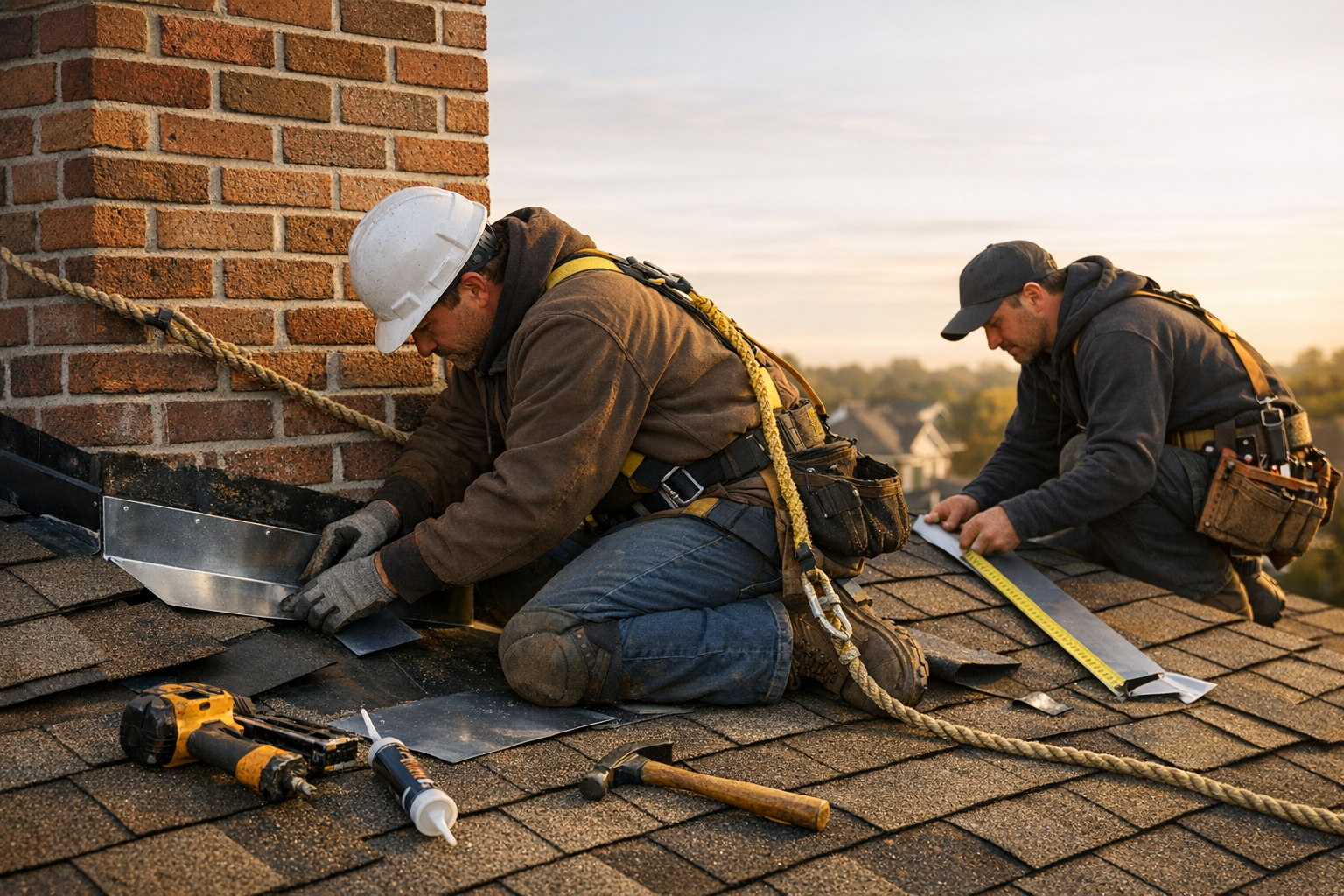
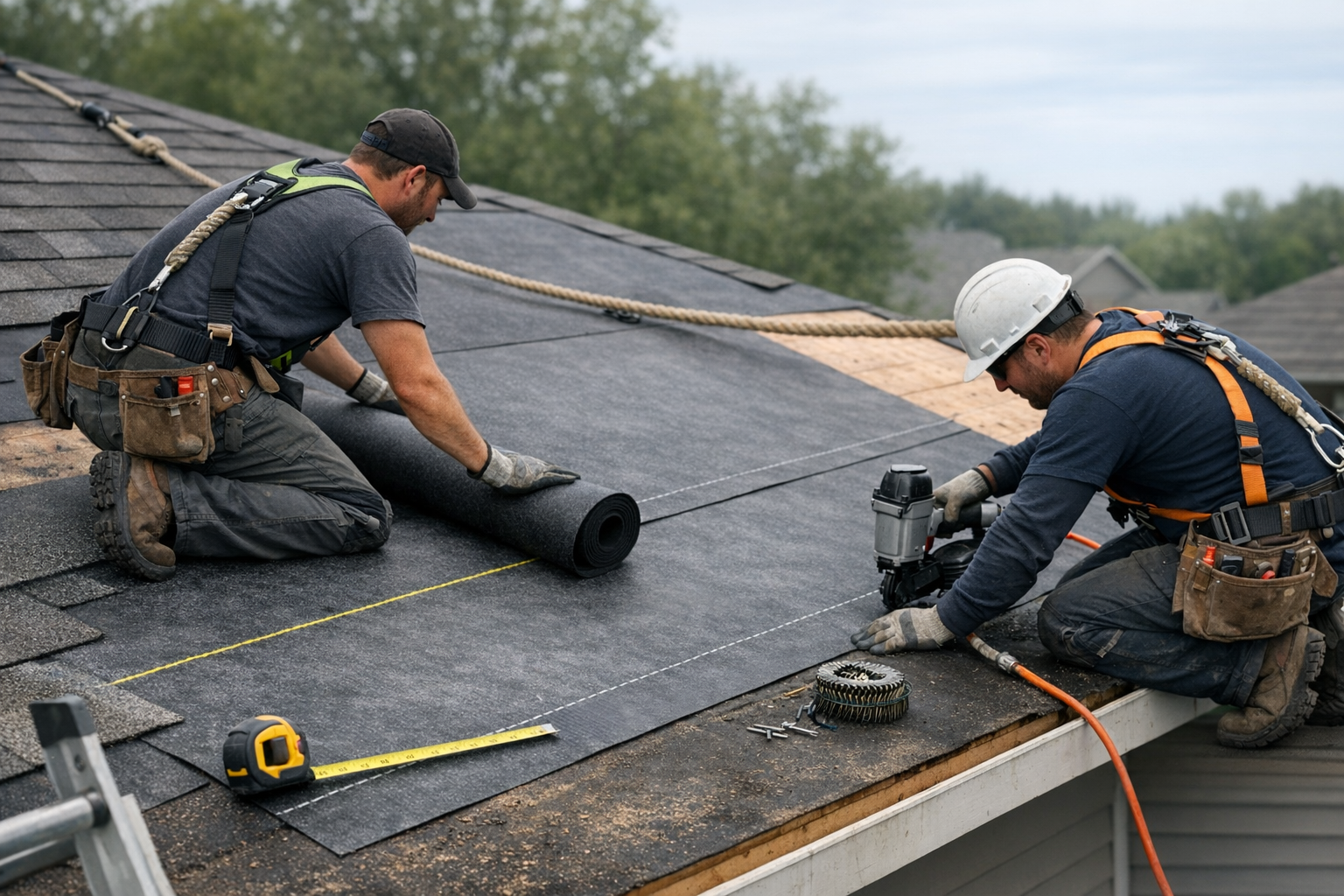
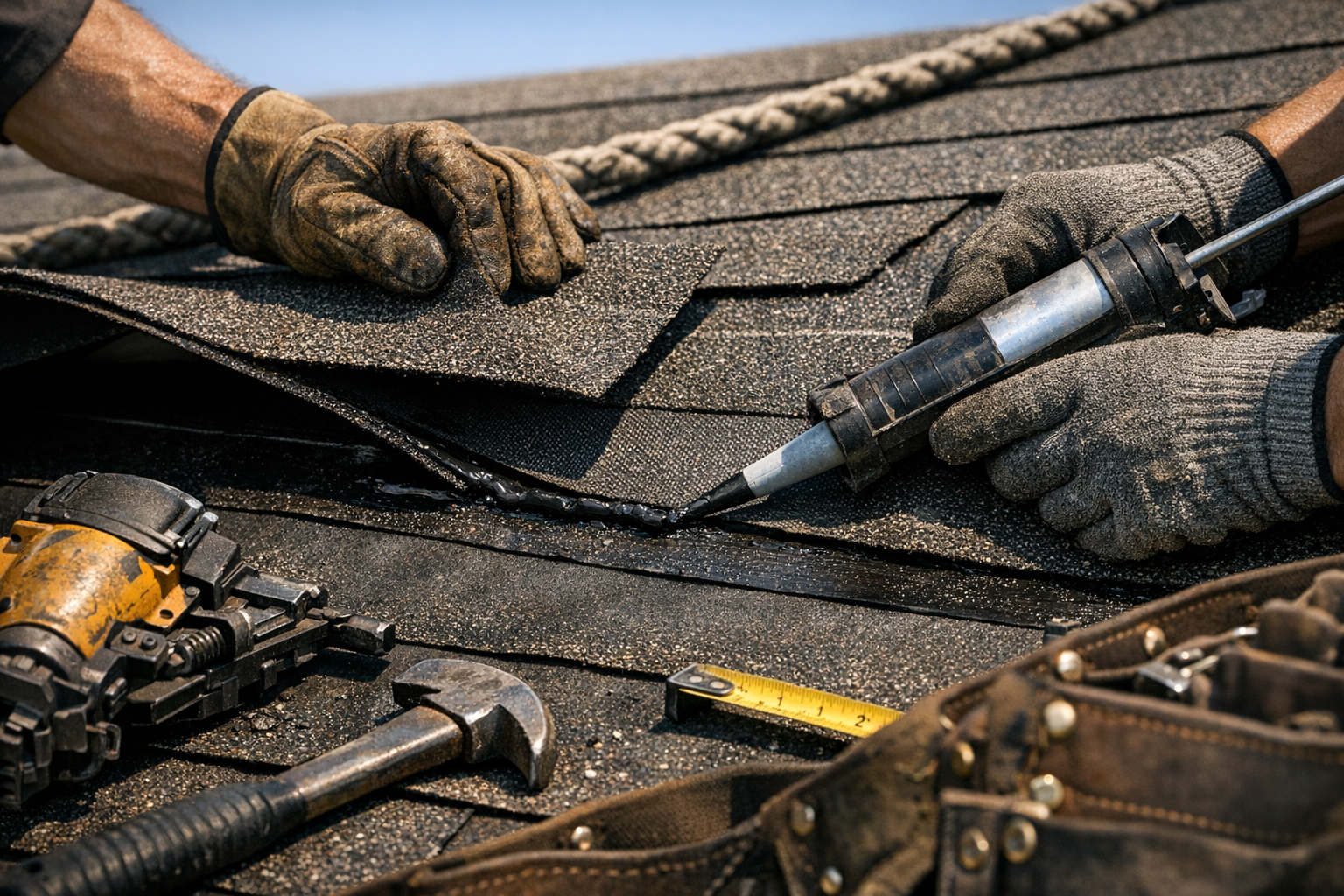
Instead of overlapping small pieces, installers roll out large sheets of rubber and bond them to the substrate. Seams between sheets are sealed with specialized adhesive or seam tape. Flashing details are carefully sealed around penetrations.
In plain terms, it acts like a heavy-duty rubber liner across your roof. Water cannot pass through the membrane. As long as seams and edges are properly sealed, the system stays watertight.
Because EPDM remains flexible even in extreme temperatures, it expands and contracts with the building. That flexibility reduces cracking and splitting compared to more rigid materials.
Key components of an EPDM roofing system (membrane, insulation, flashing, drains)
An EPDM roofing system is more than just rubber.
It typically includes:
- Roof deck: The structural base, usually wood or metal.
- Insulation board: Improves energy efficiency and creates a smooth surface.
- EPDM membrane: The waterproofing layer.
- Flashing: Seals edges, walls, and penetrations.
- Edge metal and terminations: Secure the membrane perimeter.
- Drains or scuppers: Manage water runoff.
If any of these components fail, the system can leak. For example, a perfectly good EPDM membrane will not compensate for poorly installed flashing around a vent pipe.
When I inspect roofs, I rarely see failures in the middle of the field membrane. Most problems occur at transitions, edges, and penetrations.
Why seams and edge metal matter more than the membrane itself
This is something many property owners do not realize: seams and edge details are usually the first failure points.
The membrane itself is durable. But if seams are not properly cleaned, primed, and bonded, water can infiltrate. Similarly, loose edge metal can allow wind uplift, which stresses the entire system.
Think of EPDM roofing like a pool liner. The liner is strong, but if the edges are not secured tightly, problems follow.
Quality installation means:
- Proper seam overlap and pressure rolling
- Secure edge metal attachment
- Reinforced corners and terminations
- Correct flashing at every penetration
In my experience, attention to detail at seams and edges determines whether a roof lasts 10 years or 30.
EPDM thickness options (45, 60, 90 mil) and what most property owners actually need
EPDM roofing is commonly available in 45, 60, and 90 mil thickness.
Here is how I explain it:
- 45 mil: Budget-friendly, suitable for low-traffic residential roofs.
- 60 mil: Most common choice, better durability and puncture resistance.
- 90 mil: Heavy-duty option for high-traffic or demanding environments.
For most residential applications, 60 mil EPDM roofing strikes the right balance between cost and durability. It offers better resistance to punctures from tools or foot traffic without a dramatic price increase.
Thicker membranes also qualify for longer warranty terms in many cases. Choosing thickness should be based on roof use, climate exposure, and long-term plans, not just upfront price.
EPDM Roofing Pros and Cons: Is It the Right Fit for Your Roof?
Advantages of EPDM roofing for homes and commercial buildings
EPDM roofing has remained popular for decades for good reason.
Key advantages include:
- Proven lifespan of 20 to 30 years
- Strong resistance to UV radiation
- Flexibility in cold and hot temperatures
- Relatively low installation cost
- Simple repair process
One major benefit I appreciate is repairability. If a branch punctures the membrane, it can often be patched effectively without replacing large sections.
EPDM roofing is also lightweight, which means it usually does not require structural reinforcement. That makes it practical for retrofits and additions.
Disadvantages and limitations you should know before you buy
No roofing system is perfect.
Potential downsides of EPDM roofing include:
- Black membranes absorb heat
- Seams rely on adhesive rather than heat welding
- Can be punctured by sharp objects
- Aesthetic appeal may not suit visible rooflines
Heat absorption is the most common concern. In warmer climates, black EPDM can increase roof surface temperatures significantly as explained by US department of Energy guidance on cool roofs. While insulation reduces interior impact, cooling loads may still rise.
Understanding these limitations helps you decide if EPDM roofing fits your goals.
EPDM vs. traditional flat roof materials (modified bitumen, built-up roofs)
Older flat roofs often used built-up roofing or modified bitumen systems. These involve multiple layers of asphalt-based materials.
Compared to those systems, EPDM roofing offers:
- Fewer seams
- Faster installation
- Lighter weight
- Cleaner application
Built-up roofs can be durable, but they involve more labor and more potential failure points. EPDM provides similar longevity with less complexity.
When EPDM is clearly the right call—and when it isn’t
EPDM roofing is clearly the right choice when:
- You have a flat residential roof.
- Budget matters.
- You want a long-proven system.
- Chemical exposure is not a concern.
It may not be ideal when:
- A bright white reflective roof is required.
- The building has heavy grease exhaust.
- Aesthetics are a primary design feature.
Choosing wisely means matching the material to the building’s function, not just the price tag.
When Rubber Roofing Is the Right Call: EPDM vs. TPO vs. PVC
Quick comparison: EPDM vs. TPO vs. PVC at a glance (lifespan, cost, energy, use cases)
| Feature | EPDM Roofing | TPO | PVC |
|---|---|---|---|
| Lifespan | 20 to 30 years | 15 to 25 years | 20 to 30 years |
| Cost | Lower | Moderate | Higher |
| Color | Black or white | Typically white | White |
| Seams | Adhesive | Heat-welded | Heat-welded |
| Best Use | Residential flat roofs | Energy-efficient commercial | Chemical exposure |
This overview helps narrow down options quickly.
Residential scenarios where EPDM roofing usually wins
In most residential settings, EPDM roofing is the practical choice.
For example, a homeowner adding a flat-roofed extension does not typically need chemical resistance or advanced heat-welded seams. They need reliable waterproofing at a reasonable cost.
EPDM roofing delivers that balance consistently.
Commercial scenarios where you might choose TPO or PVC instead
Commercial buildings often have different demands.
Restaurants with rooftop grease exhaust benefit from PVC due to chemical resistance. Large office buildings in hot climates may favor TPO for reflectivity and energy savings.
EPDM roofing can still work commercially, but use case matters.
How climate (heat, UV, storms, ponding water) impacts the best membrane choice
Climate plays a major role.
- High heat: White membranes may reduce cooling costs.
- Heavy UV exposure: EPDM performs well long-term.
- Frequent storms: Secure edge details and adhesion matter most.
- Ponding water: Proper drainage design is critical regardless of membrane type.
No membrane compensates for poor drainage. Good design always comes first.
Signs You Need EPDM Roof Repair vs. Full Replacement
Common EPDM roof problems: leaks, ponding, shrinkage, seams, punctures
Common issues I see with EPDM roofing include:
- Seam separation
- Flashing deterioration
- Membrane shrinkage
- Ponding water
- Punctures from debris
Many of these are repairable if caught early.
What is normal aging vs. a red flag you shouldn’t ignore
Normal aging includes slight surface chalking and minor fading.
Red flags include:
- Widespread cracking
- Multiple active leaks
- Large areas of shrinkage pulling from edges
If seams are failing in several locations, replacement may be more cost-effective.
When a simple EPDM repair is enough (and roughly what to expect)
Small punctures or isolated seam issues can usually be patched.
A contractor will clean the area, apply primer if required, and install a compatible patch. Costs vary, but minor repairs are far less expensive than replacement.
Timely repair can add years to an EPDM roofing system.
When an EPDM roof replacement is the smarter long-term move
Replacement makes sense when:
- The roof is over 25 to 30 years old.
- Repairs are frequent.
- Insulation underneath is saturated.
- Shrinkage compromises edge integrity.
At that stage, investing in a new system often prevents ongoing expenses and interior damage.
How EPDM Roofing Is Installed (Step-by-Step Overview)
Pre-installation inspection: deck condition, drainage, and existing layers
Every successful EPDM roofing project starts with inspection.
I look at:
- Structural deck integrity
- Moisture in insulation
- Drainage patterns
- Existing membrane layers
Installing over wet or damaged substrates leads to early failure.
EPDM installation methods: fully adhered, mechanically fastened, ballasted
Three main methods are used:
- Fully adhered: bonded with adhesive across the surface.
- Mechanically fastened: secured with fasteners and plates.
- Ballasted: held down with stone.
Fully adhered systems offer strong wind resistance. Mechanically fastened systems reduce labor time. Ballasted systems are less common in high-wind regions.
How seams, flashing, and terminations are detailed on an EPDM roof
Seams are overlapped and sealed with tape or adhesive. Flashing is applied around walls and penetrations. Termination bars secure vertical transitions.
Each detail must be precise. Even small installation errors can allow water intrusion.
What a quality EPDM installation looks like vs. shortcuts that cause early failure
A quality installation includes:
- Clean, properly primed seams
- Even membrane tension without wrinkles
- Secure edge metal
- Proper drainage slope
Shortcuts often involve rushed seam work or inadequate flashing. Those mistakes show up as leaks within a few years.
Is EPDM Roofing the Right Call for Your Property? Next Steps
Quick decision checklist: when to choose EPDM roofing with confidence
Choose EPDM roofing when:
- Your roof is flat or low-slope.
- You want a proven, long-lasting system.
- Budget is important.
- Chemical exposure is minimal.
That combination makes EPDM a dependable solution.
What information to gather before requesting an EPDM quote
Before requesting a quote, gather:
- Roof size in square feet
- Age of current roof
- History of leaks
- Access limitations
- Insulation concerns
Clear information leads to accurate pricing.
How a professional inspection clarifies repair vs. replacement vs. alternative membranes
A professional inspection evaluates membrane condition, insulation moisture, and drainage performance.
This assessment determines whether repair, restoration, or full replacement is appropriate. It may also clarify whether EPDM roofing or another membrane better fits your building’s needs.
Soft CTA: Schedule a flat roof inspection and get an EPDM roofing game plan tailored to your building
If you are unsure whether EPDM roofing is right for your property, the smartest next step is a thorough flat roof inspection. A detailed evaluation gives you clarity, realistic options, and a practical plan designed specifically for your building.
The goal is simple: make a confident decision based on facts, not guesswork.
Key Takeaways
- EPDM roofing is a single-ply synthetic rubber membrane ideal for flat and low-slope roofs, offering a continuous, waterproof barrier where traditional shingles would fail.
- Compared to TPO and PVC, EPDM roofing stands out for its proven 20–30 year lifespan, flexibility in varying climates, cost-effectiveness, and straightforward repair process, making it a top choice for residential flat roofs.
- Proper installation—including meticulous attention to seams, flashing, and edge details—is critical for EPDM system longevity, as most failures occur at transitions rather than in the membrane itself.
- EPDM roofing is best suited for situations where budget, longevity, and minimal chemical exposure are priorities, while alternatives like TPO or PVC may be better for high reflectivity or chemical resistance needs.
- Regular inspection and timely repair of EPDM roofs can extend their service life, but widespread seam failure, shrinkage, or underlying insulation damage often signals the need for full replacement.
Frequently Asked Questions
1. What is EPDM roofing and why is it used for flat roofs?
EPDM roofing is a durable synthetic rubber membrane designed for waterproofing flat and low-slope roofs. It creates a seamless barrier that prevents leaks, making it a popular, cost-effective choice for residential and commercial flat roofs.
2. How does EPDM roofing compare to TPO and PVC membranes?
EPDM is a flexible rubber membrane, usually black, valued for its longevity and affordability. TPO and PVC are thermoplastic membranes, generally white, with heat-welded seams and higher reflectivity or chemical resistance, making them preferred for certain commercial uses.
3. What are the main advantages and disadvantages of EPDM roofing?
EPDM roofing offers a proven 20–30 year lifespan, UV resistance, and easy repairs at a reasonable cost. However, black EPDM absorbs heat, seams rely on adhesive, and it can be punctured by sharp objects, making it less ideal for high-traffic or highly visible areas.
4. When is EPDM roofing the best option for my property?
EPDM is ideal if you have a flat or low-slope roof, need reliable waterproofing, are budget-conscious, and don’t require special chemical resistance or a highly reflective surface. It’s commonly chosen for home additions, garages, and small commercial buildings.
5. How do I know if my EPDM roof needs repair or full replacement?
If you notice isolated leaks, minor punctures, or seam issues, repairs are often sufficient. Widespread cracking, multiple leaks, severe shrinkage, or an aging roof (25+ years) usually indicate it’s time for a full EPDM roof replacement.
Take the guesswork out of your next roofing project and protect your property for years to come—contact us for professional roofing services and expert guidance on EPDM roofing solutions tailored to your needs. Experience peace of mind with a detailed inspection, clear recommendations, and a customized plan that fits your building and budget. Schedule a consultation now to get started.