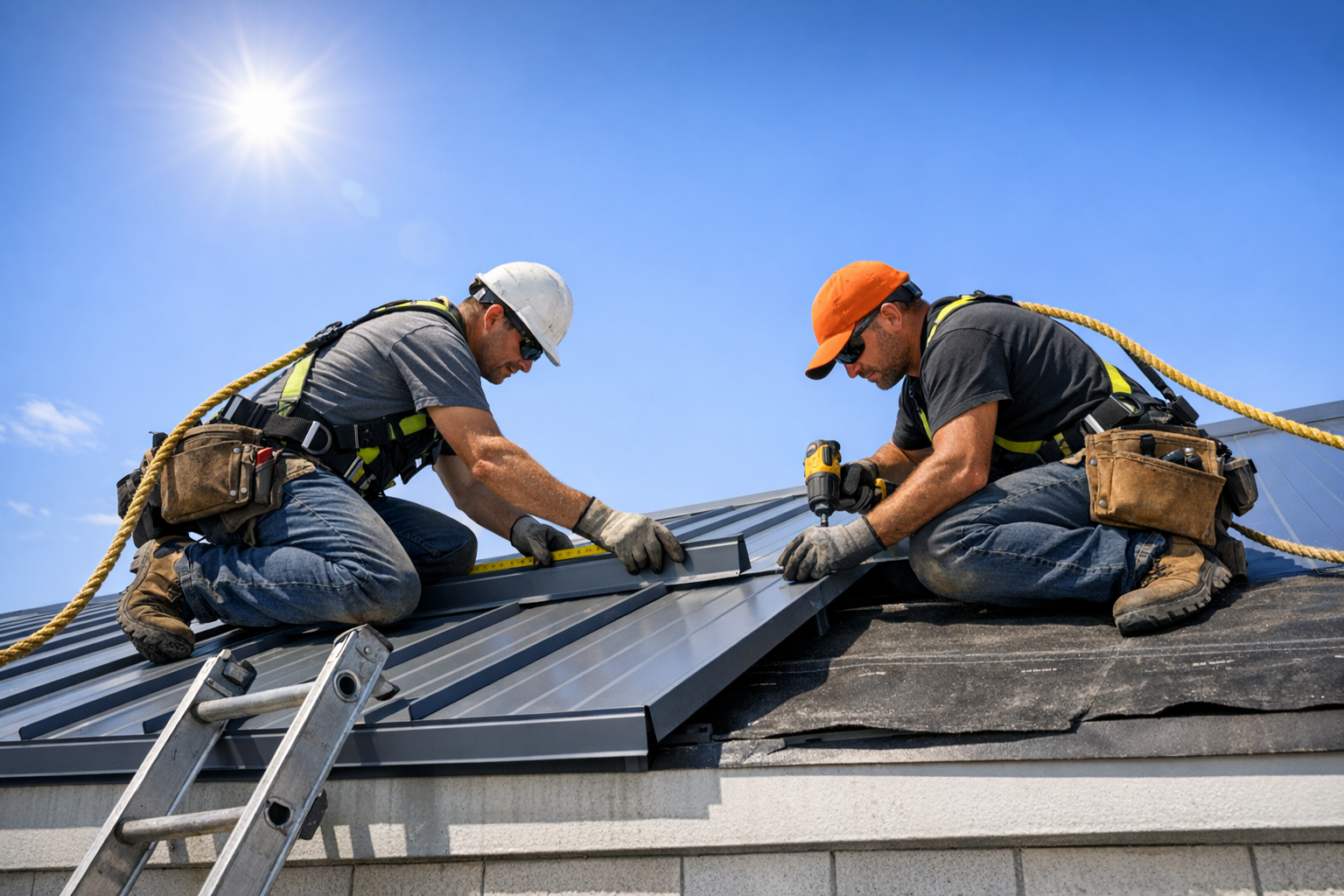

What Is Metal Roofing Cost? Understanding What You’re Really Paying For
Simple definition of metal roofing cost (materials + labor + extras)
When people ask me about metal roofing cost, they usually want a single number. The reality is that metal roofing cost includes three main components: materials, labor, and project-related extras.
Materials cover the metal panels or shingles themselves, plus trim, fasteners, flashing, and underlayment. Labor includes tear-off of the old roof, installation of the new system, and cleanup. Extras can involve permits, disposal fees, upgraded ventilation, or structural repairs.
In simple terms, metal roofing cost is the total investment required to remove your old roof and properly install a complete metal roofing system that meets code and protects your home long-term. It is not just the price of the metal panels. Understanding this difference is the first step toward making a smart decision.
One-time vs lifetime cost: why sticker price is misleading
The biggest mistake I see homeowners make is focusing only on the upfront price. Metal roofing cost is higher at installation than many alternatives, especially asphalt shingles. But the sticker price tells only part of the story.
A metal roof can last 40 to 70 years depending on the material and installation quality. Asphalt shingles often last 15 to 25 years. That means you may replace an asphalt roof two or even three times in the same period.
When I compare lifetime cost, I look at:
- Initial installation
- Maintenance and repair
- Energy efficiency savings
- Replacement cycles
The one-time investment in metal often spreads out over decades. That changes the math significantly.
How metal roofing cost compares to asphalt and other roofing types
On average, metal roofing cost per square foot is higher than asphalt shingles but often lower than slate or tile. Compared to wood shake, metal is usually similar in price but far more durable.
Asphalt is typically the lowest upfront option. Metal sits in the mid-to-premium range. Tile and slate are usually the most expensive.
What makes metal stand out is durability combined with relatively moderate weight. It offers long lifespan without the structural demands of heavy materials. When clients ask me which option balances cost and performance, metal often lands in the sweet spot.
Key Factors That Drive Metal Roofing Cost
Metal type (steel, aluminum, copper, zinc) and how each changes price
The type of metal you choose directly affects metal roofing cost. Steel is the most common and usually the most affordable. It is strong, widely available, and comes in various coatings for corrosion resistance.
Aluminum costs more than steel but performs better in coastal environments because it resists salt corrosion. Copper and zinc are premium materials. They are beautiful, long-lasting, and significantly more expensive.
As a rough hierarchy from lower to higher cost:
- Steel
- Aluminum
- Zinc
- Copper
Each option has its place. I help homeowners choose based on climate, budget, and long-term goals.
Panel style: standing seam vs metal shingles vs corrugated
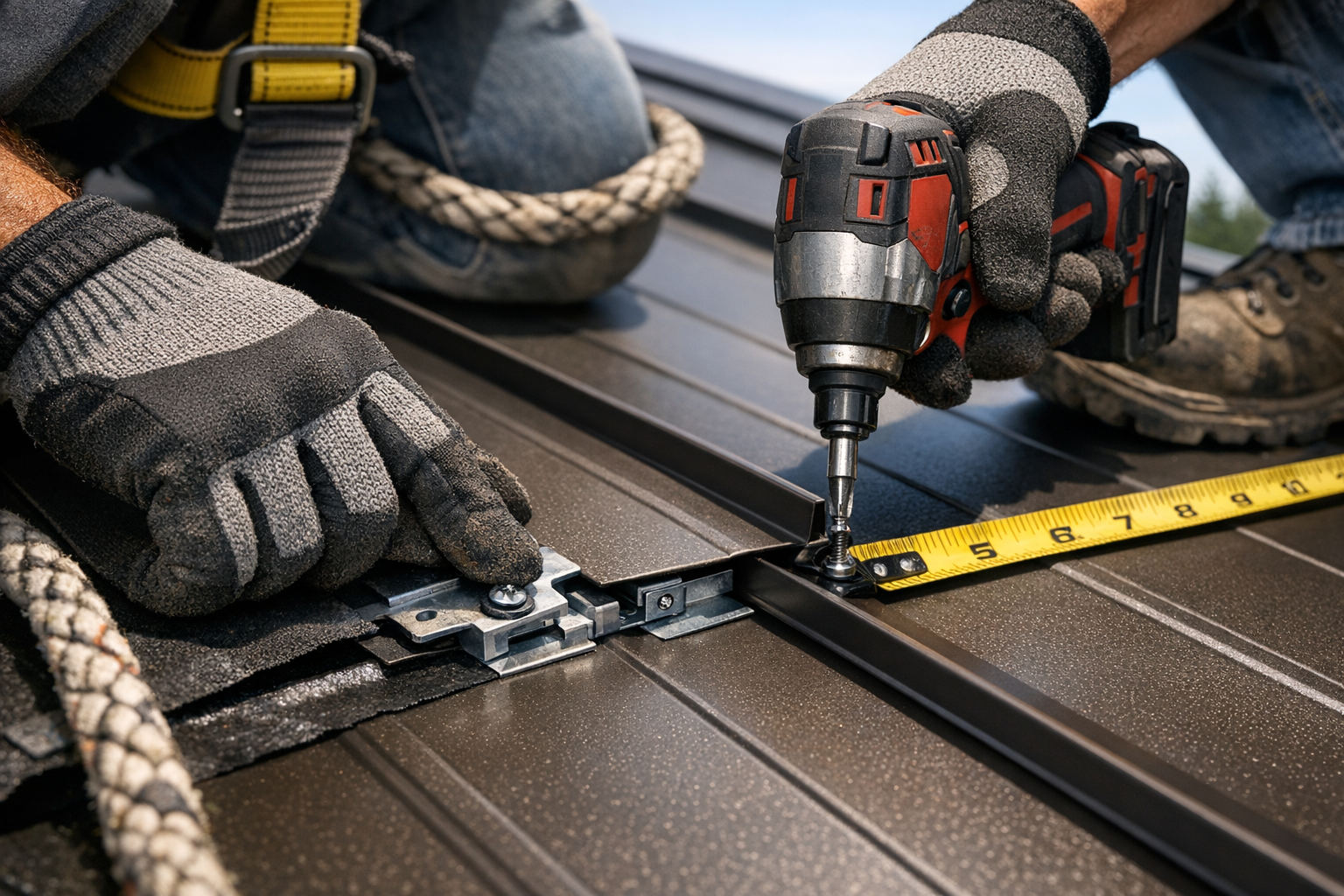
Panel style also plays a major role in metal roofing cost. Standing seam systems, with concealed fasteners and vertical panels, typically cost more because they require precision fabrication and skilled installation.
Metal shingles mimic traditional roofing styles like slate or shake. They usually fall in the mid-to-high range. Corrugated panels with exposed fasteners are often the most budget-friendly option.
Standing seam tends to be the most durable and lowest maintenance over time. Exposed fastener systems are more affordable upfront but may require periodic fastener replacement. The right choice depends on how long you plan to stay in the home and how much maintenance you are willing to handle.
Roof complexity: pitch, height, and architectural features
A simple, single-story ranch home costs less per square foot to roof than a steep, multi-story home with dormers and valleys. Roof pitch increases labor time and safety requirements. Height adds staging and fall protection needs.
Architectural features like skylights, chimneys, and multiple valleys increase flashing and detailing work. More detail means more labor hours.
I always tell homeowners that metal roofing cost is not just about size. It is about complexity. Two homes with identical square footage can have very different final bills.
Regional labor rates, permits, and disposal fees
Labor costs vary widely by region. Urban areas with higher wages naturally increase total metal roofing cost. Rural regions may be more affordable.
Permits and inspection fees also differ by municipality. Some areas require upgraded underlayment or specific fastening methods due to wind or snow loads.
Disposal fees for old roofing materials can also add up, especially if multiple layers need removal. These local variables are often overlooked in online cost calculators.
Underlayment, ventilation, and code requirements
A metal roof is only as good as the system beneath it. High-temperature underlayment, proper ventilation, and code-compliant fastening systems are essential.
In some cases, building codes require ice and water shield in certain areas. Upgrading attic ventilation can prevent condensation and extend roof life.
These components add to metal roofing cost, but they protect your investment. Skipping them may reduce upfront price but often leads to expensive problems later.
Typical Metal Roofing Cost Ranges (With Realistic Numbers)
National average cost per square foot and per “square”
Nationally, metal roofing cost typically ranges from $8 to $16 per square foot installed. Premium systems can exceed $18 per square foot.
Roofers often price by the “square,” which equals 100 square feet. That means:
- $800 to $1,600 per square for most projects
- Higher for copper or complex designs
For a 2,000 square foot roof, that translates to roughly $16,000 to $32,000 depending on material and complexity.
Cost breakdown by metal type (entry, mid, premium tiers)
Entry tier steel systems may range from $8 to $11 per square foot installed. Mid-range standing seam systems often fall between $10 and $14. Premium metals like copper or zinc can range from $18 to $30 or more.
These tiers reflect both material and labor complexity. The more intricate the system, the higher the labor portion of metal roofing cost.
Cost differences: tear-off and replacement vs roof-over
If we remove an old roof, expect additional costs for labor and disposal. Tear-off can add $1 to $3 per square foot.
In some cases, a metal roof can be installed over a single existing layer. This may reduce labor and disposal costs. However, it is only appropriate when the existing deck is sound and local code allows it.
I always evaluate roof condition before recommending a roof-over approach.
How home size and roof design change your final bill
Larger roofs do not always scale linearly in price. Very small roofs often have a higher cost per square foot due to fixed mobilization costs. Large, simple roofs may benefit from efficiency.
Complex designs increase waste factors. More cuts mean more material loss. That waste is factored into metal roofing cost estimates.
Metal Roofing Cost vs Asphalt Shingles: True Lifetime Value
Upfront cost comparison: budget, mid-range, and premium tiers
Asphalt shingles typically cost $4 to $7 per square foot installed. Metal roofing cost starts higher, often around $8 per square foot and up.
Budget-conscious homeowners may lean toward asphalt. However, premium architectural shingles narrow the gap, especially when compared to mid-range metal systems.
Upfront, asphalt wins on price. Long-term, the conversation changes.
Lifespan, maintenance, and repair cost over 20–50 years
Asphalt may need replacement every 20 to 25 years. Metal can last 40 to 70 years. That means potentially two asphalt replacements in the time one metal roof performs.
Metal generally requires less maintenance. It resists cracking, curling, and granule loss.
When I map out 40 years of ownership, metal roofing cost often equals or beats asphalt after factoring in replacement cycles and inflation.
Energy savings, insurance discounts, and resale value
Metal roofs reflect solar radiation, especially with reflective coatings, as outlined in the Department of Energy cool roofs guidance
Some insurers offer discounts for impact-resistant metal roofing systems. Additionally, a long-lasting roof can enhance resale value because buyers know they will not face replacement soon.
These indirect savings are often overlooked when evaluating metal roofing cost.
When metal is cheaper than shingles over the life of the roof
- You plan to stay in the home long-term
- Your climate is harsh with high winds or heavy snow
- Energy savings are meaningful
- You want to avoid multiple re-roofing cycles
In those scenarios, the higher upfront metal roofing cost pays off.
Hidden Metal Roofing Costs Homeowners Don’t Expect
Structural fixes, sheathing upgrades, and rotten decking
Once the old roof is removed, hidden damage sometimes appears. Rotten decking or sagging framing must be repaired before installing metal panels.
These repairs add to metal roofing cost but are necessary for safety and code compliance. I always recommend budgeting a contingency for unexpected deck replacement.
Flashing, chimney, skylight, and valley details
Chimneys, skylights, and complex valleys require custom flashing. These details are labor-intensive and critical for leak prevention.
Homeowners often focus on panel price but forget that detail work significantly influences total metal roofing cost.
Unexpected change orders and how to avoid them
Change orders typically happen when project scope is unclear. Vague contracts can lead to surprise charges.
I advise reviewing scope carefully. Make sure decking replacement terms, underlayment type, and flashing details are clearly defined. Clarity prevents cost escalation.
Financing costs, interest, and payment plan trade-offs
If you finance your project, interest increases total metal roofing cost. A low monthly payment may feel manageable, but long-term interest adds up.
Always calculate total repayment, not just monthly amounts.
How to Estimate Your Metal Roofing Cost Step by Step
Step 1: Measure or approximate your roof area safely
You can approximate roof size using home footprint and pitch multiplier. For example, a 1,500 square foot footprint with moderate pitch may equal 1,650 to 1,800 square feet of roofing.
Avoid climbing on the roof unless trained. Online satellite tools can help with rough estimates.
Step 2: Choose metal type and profile for your budget
Decide between steel, aluminum, or premium metals. Then choose panel style. This sets your material cost range.
For example, standing seam steel at $12 per square foot provides a mid-range benchmark.
Step 3: Add labor, tear-off, and disposal estimates
Add $1 to $3 per square foot for tear-off if required. Include regional labor adjustments.
Combine material and labor for a realistic metal roofing cost projection.
Step 4: Include accessories, ventilation, and contingencies
Add underlayment upgrades, ridge vents, flashing, and a 5 to 10 percent contingency.
Simple sample calculation for a typical home
Example:
1,800 square feet x $12 per square foot = $21,600
Tear-off at $2 per square foot = $3,600
Accessories and contingency at $2,000
Estimated total metal roofing cost: $27,200
This is a simplified example, but it shows how numbers build.
Design Choices That Influence Metal Roofing Cost
Color, coatings, and paint systems (Kynar vs polyester)
High-performance coatings like Kynar cost more than standard polyester. They resist fading and chalking better over time.
Upgrading coatings increases metal roofing cost slightly but extends aesthetic lifespan.
Exposed fastener vs concealed fastener systems
Exposed fastener systems are less expensive upfront. Concealed fastener systems, like standing seam, cost more but reduce long-term maintenance.
This choice affects both initial and lifetime metal roofing cost.
Soundproofing, insulation, and energy-efficiency upgrades
Adding insulation or acoustic underlayment can reduce rain noise and improve energy efficiency.
These upgrades raise upfront metal roofing cost but enhance comfort.
Snow guards, gutters, and ice management add-ons
In snowy climates, snow guards prevent dangerous snow slides. Heated cables may prevent ice dams.
These add-ons are situational but important for safety and performance.
Common Metal Roofing Cost Mistakes (And How to Avoid Them)
Choosing the cheapest bid without comparing scope
The lowest metal roofing cost estimate may exclude critical components. Always compare scope line by line.
Ignoring warranties, certifications, and installer experience
A strong warranty and skilled installation protect your investment. Cheap installation can void manufacturer coverage.
Underestimating ventilation and moisture control needs
Poor ventilation leads to condensation problems. Proper airflow should be part of your metal roofing cost evaluation.
Focusing only on price instead of total value
Look at durability, lifespan, and maintenance. True value often outweighs lowest price.
How to Read and Compare Metal Roofing Quotes
What a professional metal roofing estimate should include
A clear estimate should list materials, panel type, underlayment, flashing, tear-off, disposal, labor, timeline, and warranty terms.
Transparency is key to understanding true metal roofing cost.
Red flags in low-cost quotes and “too good to be true” pricing
Be cautious of vague descriptions, missing permit details, or unusually low labor rates.
These often lead to add-ons later.
Questions to ask contractors about metal roofing cost
- What metal type and gauge is included?
- Is tear-off included?
- What underlayment is specified?
- How are unexpected repairs handled?
Clear answers signal professionalism.
Fixed-price contracts vs allowances and time-and-materials
Fixed-price contracts provide certainty. Allowances can shift risk to homeowners.
I prefer clear, defined pricing whenever possible.
When Metal Roofing Is Worth the Higher Cost
Climate, storm exposure, and fire-risk considerations
Metal performs well in high wind, heavy snow, and fire-prone regions. Durability justifies higher metal roofing cost in harsh climates.
Long-term plans: how long you’ll stay in the home
If you plan to stay decades, metal makes financial sense. Short-term owners may prioritize resale appeal.
ROI: energy efficiency, durability, and curb appeal
Metal offers modern aesthetics and strong durability. These factors contribute to return on investment.
Ideal scenarios where metal clearly beats other options
Metal is ideal when homeowners want long lifespan, minimal maintenance, and strong weather resistance.
Choosing a Contractor Who Is Honest About Metal Roofing Cost
Verifying licenses, insurance, and metal roofing specialization
Confirm licensing and insurance. Ensure the contractor specializes in metal, not just shingles.
Checking references, portfolios, and installation details
Review past metal projects. Look for clean panel alignment and proper flashing.
How reputable contractors explain pricing and options
An honest contractor breaks down metal roofing cost clearly and explains trade-offs between options.
Why transparent pricing builds trust (and protects you)
Transparent pricing prevents surprises. It ensures you understand exactly what you are paying for.
Next Steps: Getting an Accurate Metal Roofing Cost for Your Home
What to prepare before requesting quotes
Gather roof size estimates, note problem areas, and define your budget range.
How on-site inspections refine your cost range
An in-person inspection reveals deck condition, ventilation issues, and complexity factors that affect metal roofing cost.
Using professional guidance to align budget, design, and performance
The right guidance balances price, durability, and aesthetics. When metal roofing cost is clearly explained and properly scoped, you can invest with confidence and avoid costly surprises later.
Key Takeaways
- Metal roofing cost includes materials, labor, and extras like underlayment and permits, averaging $8–$16 per square foot installed.
- While metal roofs are pricier upfront than asphalt shingles, their 40–70 year lifespan and lower maintenance can make them cheaper over time.
- Key factors influencing cost are metal type, panel style, roof complexity, and regional labor rates, with steel often offering the best value.
- Accurate estimates require detailed quotes, consideration of hidden costs, and contractor transparency to avoid surprises and ensure quality.
- Metal roofing delivers long-term value, especially in harsh climates or for homeowners planning to stay 20+ years, offering energy savings and strong resale appeal.
Frequently Asked Questions
1. What is included in the total metal roofing cost?
Metal roofing cost covers materials, labor, and extras like underlayment, ventilation, permits, and disposal. It represents the full price to remove your old roof, install the new metal system, and ensure everything meets building codes.
2. How does metal roofing cost compare to asphalt shingles?
Metal roofing is usually double the upfront cost of asphalt shingles but lasts two to three times longer, offering better long-term value and potentially lower lifetime costs if you stay in your home for decades.
3. What factors influence the price of a metal roof?
Key factors include metal type (steel, aluminum, copper, or zinc), panel style, roof complexity, regional labor rates, and required code upgrades such as underlayment and ventilation improvements.
4. What is the average metal roofing cost per square foot?
Nationally, installed metal roofing costs range from $8 to $16 per square foot, depending on metal type, installation style, and project specifics.
5. Is metal roofing worth the higher initial investment?
Yes, for many homeowners, metal roofing’s durability, lower maintenance, energy savings, and long lifespan can outweigh the higher upfront cost, especially in harsh climates or for long-term homeownership.
Take the guesswork out of your metal roofing project and invest with confidence. For transparent pricing, expert guidance, and durable roofing services tailored to your home, schedule a consultation today and discover the long-term benefits of a quality metal roof.