
Metal Roofing Vs Shingles: Which Wins In Puget Sound Rain?
Wondering whether metal roofing or asphalt shingles will actually stand up to Puget Sound’s constant rain, moss, and wind—without draining your budget? This article breaks down how each roof type performs in our unique Seattle–Bellevue climate, comparing cost, lifespan, maintenance, and long-term value so you can confidently choose the best roof for your home and how long you plan to stay.
What Is the Difference Between Metal Roofing vs Shingles for Puget Sound Homes?
When homeowners ask me about Metal Roofing Vs Shingles, they are usually trying to answer one big question: which roof will actually hold up in Puget Sound rain? Before we get into cost and lifespan, it helps to understand how each system works and why our climate changes the comparison.
Simple Definitions: How Each Roof System Works
Let me start with a clear definition.
Asphalt shingles are layered roofing materials made from a fiberglass mat coated in asphalt and topped with protective granules. They are installed in overlapping rows, creating a water-shedding surface that directs rain down the slope of your roof.
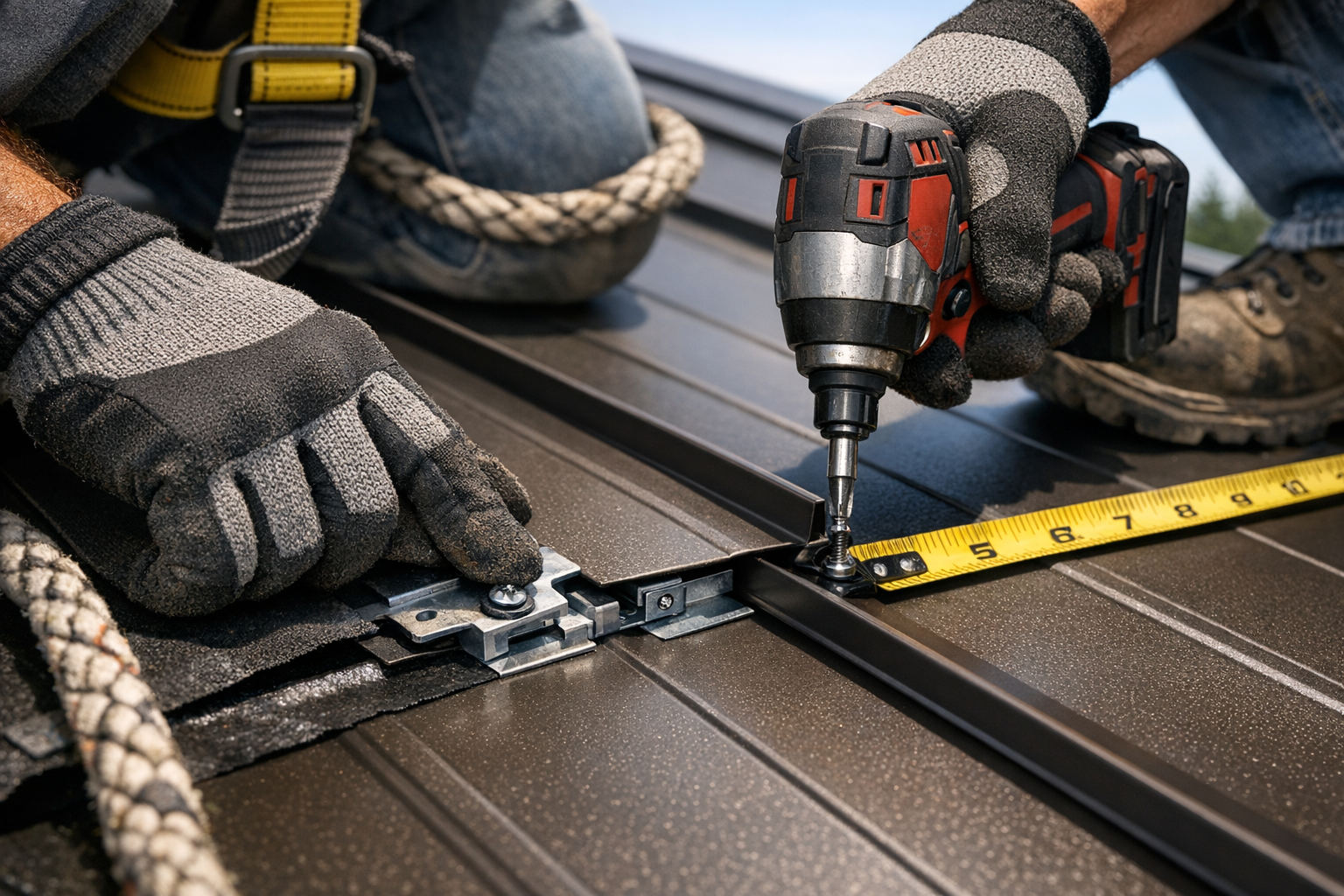
Metal roofing typically refers to steel or aluminum panels or shingles. The most common premium option is standing seam metal, where vertical panels lock together with raised seams that conceal fasteners and channel water off the roof.
Here is the practical difference I explain to homeowners:
- Shingles rely on layered overlap and gravity to shed water.
- Metal panels rely on interlocking seams and fewer exposed fasteners.
- Shingles form a textured surface.
- Metal creates larger, smoother planes.
In heavy, consistent rain like we see in Seattle and Bellevue, that difference in surface and seam design matters more than most people realize.
Key Components: Underlayment, Fasteners, Flashing, and Ventilation
Whether we are installing shingles or metal, the visible roof is only part of the system. I always remind clients that performance depends on what is underneath.
Key components include:
- Underlayment: A water-resistant or waterproof barrier installed over the roof deck.
- Fasteners: Nails for shingles, screws or concealed clips for metal.
- Flashing: Metal pieces that seal valleys, chimneys, skylights, and wall intersections.
- Ventilation: Intake and exhaust airflow that keeps moisture from building up in the attic.
In a wet climate, I pay special attention to ice-and-water membrane in valleys and along eaves. In Metal Roofing Vs Shingles comparisons, poor flashing detail is often the real cause of leaks, not the surface material itself.
Ventilation is equally critical. The National Roofing Contractors Association notes that proper attic ventilation is a key performance consideration and is tied to removing excess moisture: Ventilation guidelines (NRCA).
Why Puget Sound’s Rainy, Mossy Climate Changes the Equation
Puget Sound does not just get heavy rain. We get long periods of dampness, overcast skies, and slow dry-out times. That is a different stress pattern than short, intense storms in other regions.
Here is what our climate adds to the Metal Roofing Vs Shingles debate:
- Moss growth on shaded slopes
- Algae staining
- Wind-driven rain
- Tree debris from evergreens
- Salt air in coastal communities
Shingles can perform very well here, but they require more maintenance because moss thrives in wet Pacific Northwest conditions. Oregon State University Extension outlines why roof moss is common and how to control it safely: How to control roof moss and prevent long-term damage (OSU Extension).
So when I evaluate a home in Tacoma, Everett, or Kirkland, I do not just look at square footage. I look at tree coverage, slope orientation, and how long each section of roof stays wet after a storm.
That is where the real differences begin to show.
Metal Roofing Vs Shingles: Pros, Cons, and Best Fits in Puget Sound
Now let’s get specific. Both systems work in Western Washington. The better choice depends on budget, timeline, and tolerance for maintenance.
Advantages of Asphalt Shingles in Western Washington
Asphalt shingles are popular for a reason. They are cost-effective, widely available, and versatile in appearance.
Here is what I like about shingles in our area:
- Lower upfront cost
- Faster installation timeline
- Easier spot repairs
- Wide range of colors and profiles
For homeowners planning to move within 7 to 10 years, shingles often make financial sense. Architectural shingles can last 20 to 30 years under good conditions, which is enough for many families.
They also blend well into established neighborhoods. In older Craftsman areas or HOA communities with strict appearance rules, shingles are often the safest aesthetic choice.
Advantages of Metal Roofing in a Wet, Windy Marine Climate
Metal roofing shines in durability and longevity.
In the context of Metal Roofing Vs Shingles, here is where metal often wins:
- 40 to 50 year lifespan in many cases
- Excellent water shedding
- Strong wind resistance when properly installed
- Lower moss adhesion
- High fire resistance
In shaded, tree-heavy lots common around Puget Sound, I see metal roofs stay cleaner with less biological growth. That translates to less frequent cleaning and fewer worries about moss lifting edges.
Standing seam systems also use concealed fasteners, which reduces potential leak points over time.
For homeowners who view roofing as a long-term investment rather than a short-cycle expense, metal can be the smarter play.
Drawbacks of Each Roof Type Specifically in Puget Sound Conditions
No roof is perfect. I always walk clients through the trade-offs honestly.
For shingles:
- Moss and algae growth require periodic treatment
- Granule loss over time from constant moisture
- Shorter lifespan compared to metal
- Potential for blown tabs in windstorms
For metal:
- Higher upfront cost
- More specialized installation required
- Potential for denting from large falling branches
- More noticeable installation errors if done poorly
In my experience, poor installation causes more problems than material choice. In Metal Roofing Vs Shingles debates, workmanship often determines the real winner.
When Shingles Make More Sense (and When They Don’t)
Shingles usually make sense when:
- Budget is tight
- You plan to sell within a decade
- Roof design is complex with many valleys and dormers
- Neighborhood style leans traditional
They make less sense when the home is heavily shaded and maintenance is likely to be neglected. If I see thick moss on the current roof and tall fir trees overhead, I have a candid conversation about upkeep expectations.
When Metal Roofing Is the Smarter Long-Term Bet
Metal roofing tends to make sense when:
- You plan to stay 20 to 30 years or more
- You want minimal long-term maintenance
- You are adding solar panels
- You prioritize fire resistance
If someone tells me this is their forever home, I almost always include a metal option in the proposal. Over decades, the math often favors longevity.
Cost of Metal Roofing vs Shingles in the Seattle–Bellevue Area
Cost is usually the deciding factor, so let’s break it down clearly.
Typical Upfront Price Ranges for a Puget Sound Roof Replacement
In the Seattle–Bellevue market, architectural shingles generally cost significantly less per square foot than standing seam metal.
While every project varies, the pattern looks like this:
- Shingles: Lower initial investment
- Metal: Higher initial investment, often 1.5 to 2.5 times more depending on system
Roof size, access, and tear-off requirements heavily influence the final number.
How Roof Size, Pitch, and Complexity Shift Your Final Bid
A steep 10:12 pitch costs more than a low 4:12 slope. Multiple valleys, skylights, and chimneys increase labor and flashing detail.
In tight urban lots, staging materials is harder, which affects labor time. I always tell homeowners that complexity, not just material, drives cost.
Long-Term Costs: Repairs, Moss Treatment, and Reroof Cycles
With shingles, expect:
- Moss treatment every few years
- Occasional tab replacement
- Full replacement in 20 to 30 years
With metal:
- Minimal biological treatment
- Periodic inspection
- Much longer replacement cycle
Over 30 to 40 years, shingles may require two roof installations. Metal often requires one.
Energy Bills, Insurance, and Resale Value: Where You Save Over 20–40 Years
Metal roofing can reflect more solar radiation, especially with lighter finishes. While our climate is mild, summer heat waves are becoming more common.
Some insurance carriers value fire-resistant materials. Resale value can also benefit from a long-lasting roof with transferable warranties.
Metal vs Shingle Cost Scenarios: 10-Year Stay vs 30-Year “Forever Home”
If you stay 10 years, shingles are usually more economical.
If you stay 30 years, Metal Roofing Vs Shingles often tips toward metal in total cost of ownership.
The key is aligning material choice with how long you plan to live under it.
Lifespan and Durability: Which Roof Survives Puget Sound Weather Better?
Durability is not just about product specs. It is about real-world performance in constant moisture.
Expected Lifespan of Architectural Shingles in a Wet, Moss-Prone Climate
In Western Washington, I typically see architectural shingles last 20 to 30 years with good ventilation and maintenance.
Heavy shade and neglected moss can shorten that lifespan. North-facing slopes usually age faster.
Expected Lifespan of Standing Seam and Other Metal Roofs Here
Standing seam metal roofs often last 40 to 50 years or more. Protective coatings and proper installation are critical.
When installed correctly, metal handles constant moisture very well.
Rain, Moss, and Algae: How Each Material Handles Constant Moisture
Shingles hold more surface moisture due to their texture. Metal sheds water faster.
That does not mean shingles fail quickly. It means they need more routine care in damp, shaded environments.
Wind, Storms, and Falling Branches: Real-World Performance
High-quality shingles with proper nailing patterns perform well in wind. Metal systems with concealed fasteners perform exceptionally well.
Large falling branches can damage either system. Prompt inspection after storms is always wise.
Fire, Hail, and Embers: Safety Considerations for Washington Homes
Both systems can achieve high fire ratings when installed properly. Metal is noncombustible, which offers added peace of mind in forest-adjacent neighborhoods.
In the end, Metal Roofing Vs Shingles in Puget Sound is less about which material is universally better and more about which aligns with your home, budget, and long-term plans. The right answer depends on your priorities, and that is exactly how I approach every consultation.
Key Takeaways
- Metal roofing offers superior longevity (40–50 years), better water shedding, and lower moss buildup than shingles, making it ideal for Puget Sound’s rainy, moss-prone climate.
- Asphalt shingles remain popular for their lower upfront cost, easier repairs, and neighborhood compatibility, but require more maintenance and typically last 20–30 years in Western Washington.
- Long-term cost comparisons favor metal roofing for homeowners planning to stay 20+ years, while shingles are more economical for those expecting to move within a decade.
- Roof performance in Puget Sound is influenced not just by material, but by installation quality, underlayment, flashing, and ventilation—critical factors for preventing leaks and moisture damage.
- Choosing between metal roofing vs shingles should align with your home’s specific conditions, maintenance preferences, budget, and how long you plan to stay, as no single option is universally best.
Frequently Asked Questions
1. What is the main difference between metal roofing and shingles in Puget Sound?
Metal roofing uses interlocking panels for superior water shedding, while shingles rely on overlapping layers. In Puget Sound’s rainy climate, metal sheds water and debris more efficiently, but both systems have pros and cons depending on your home’s needs.
2. Which lasts longer in Seattle’s wet climate: metal roofing or shingles?
Metal roofing typically lasts 40 to 50 years or more, while architectural shingles usually last 20 to 30 years with proper care. Metal’s durability and resistance to moss make it a strong choice for long-term performance in the Seattle area.
3. Are metal roofs more expensive than shingles in the Seattle–Bellevue area?
Yes, metal roofs have a higher upfront cost—often 1.5 to 2.5 times more than shingles. However, metal can be more cost-effective over decades due to fewer replacements and lower maintenance, especially if you plan to stay in your home long-term.
4. How does Puget Sound’s climate affect roof maintenance for shingles versus metal?
Puget Sound’s damp, moss-prone climate means shingles need regular moss treatment and maintenance. Metal roofing, with its smoother surface, sheds moisture and debris more easily and requires less routine cleaning in the region’s rainy, shaded environments.
5. When is it better to choose shingles over metal roofing in Western Washington?
Shingles are often best for tighter budgets, short-term ownership, or homes with complex rooflines. They blend well with traditional neighborhoods but need more maintenance. Metal roofing is better for long-term homeowners seeking durability and lower upkeep.
If you are ready to make the best choice for your home with expert roofing services tailored to Puget Sound’s unique climate, do not wait— schedule a consultation with our team today to get personalized advice and a detailed plan for your next metal roofing or shingle project.