
Roof Replacement Near Me: How To Choose Based On Proof, Not Promises
Searching “roof replacement near me” usually means you’re under pressure from leaks, insurance letters, or looming inspections—and the last thing you need is a fast-talking sales pitch. This guide shows you how to turn that urgency into a confident, proof-first decision by understanding roof replacement vs. repair, decoding insurance demands, evaluating contractors based on hard evidence, and comparing quotes so you get real protection instead of expensive surprises.
Why “Roof Replacement Near Me” Should Start With Proof, Not Sales Hype
What homeowners actually mean when they search “roof replacement near me”
When someone types roof replacement near me into Google, they are rarely browsing casually. In my experience, that search usually comes from stress. There is often a leak, an insurance letter, storm damage, or a home sale on the horizon. The search is not really about shingles. It is about urgency, cost, and risk.
Most homeowners want three things: clarity, fairness, and confidence. They want to know if they truly need a full roof replacement, how much it will cost, and whether they can trust the company they hire. They are not looking for a sales pitch. They are looking for proof.
That is why I believe the phrase roof replacement near me should trigger a different mindset. Instead of asking, “Who can give me the lowest price?” a better question is, “Who can show me clear evidence of what my roof needs and why?” That shift changes everything.
The danger of choosing based on price, ads, or pressure tactics
I have seen homeowners choose a contractor because of a coupon, a yard sign, or a high-pressure visit after a storm. It feels fast and convenient, but it often skips the most important step: understanding the condition of the roof system as a whole.
A low quote can hide missing scope items such as underlayment upgrades, flashing replacement, or ventilation corrections. If those are not addressed, the roof may look new but still fail inspections later. That cheap price becomes expensive.
Pressure tactics are another red flag. If someone insists you must sign today or claims your insurance will “cover everything” without documentation, slow down. A professional roof replacement company should welcome questions, not avoid them.
Why proof matters more than promises for insurance, resale, and peace of mind
Proof protects you long after the crew leaves. Insurance carriers often require documentation that the roof was replaced properly. Future buyers may request permits, warranties, and photos. Appraisers consider roof condition in property value assessments.According to the Appraisal Institute, major structural components such as roofing can influence a property’s overall marketability and condition assessment
Promises disappear. Documentation lasts.
Proof includes inspection reports, detailed scopes, product information, and completion paperwork. When you search roof replacement near me, you should expect a company to show you exactly what they are doing, why they are doing it, and how it aligns with code and manufacturer requirements.
How this guide helps you move from “urgent stress” to a confident decision
This guide walks you step by step through what to check, what to ask, and what to document. My goal is to help you move from reactive decision-making to structured evaluation.
Instead of feeling rushed, you will know how to confirm deadlines, evaluate inspections, compare quotes, and store records. That clarity replaces panic with process. And process leads to better outcomes.
What Is Roof Replacement (And How Is It Different From a Roof Repair)?
Simple definition: roof replacement vs. repair vs. re-roof/overlay
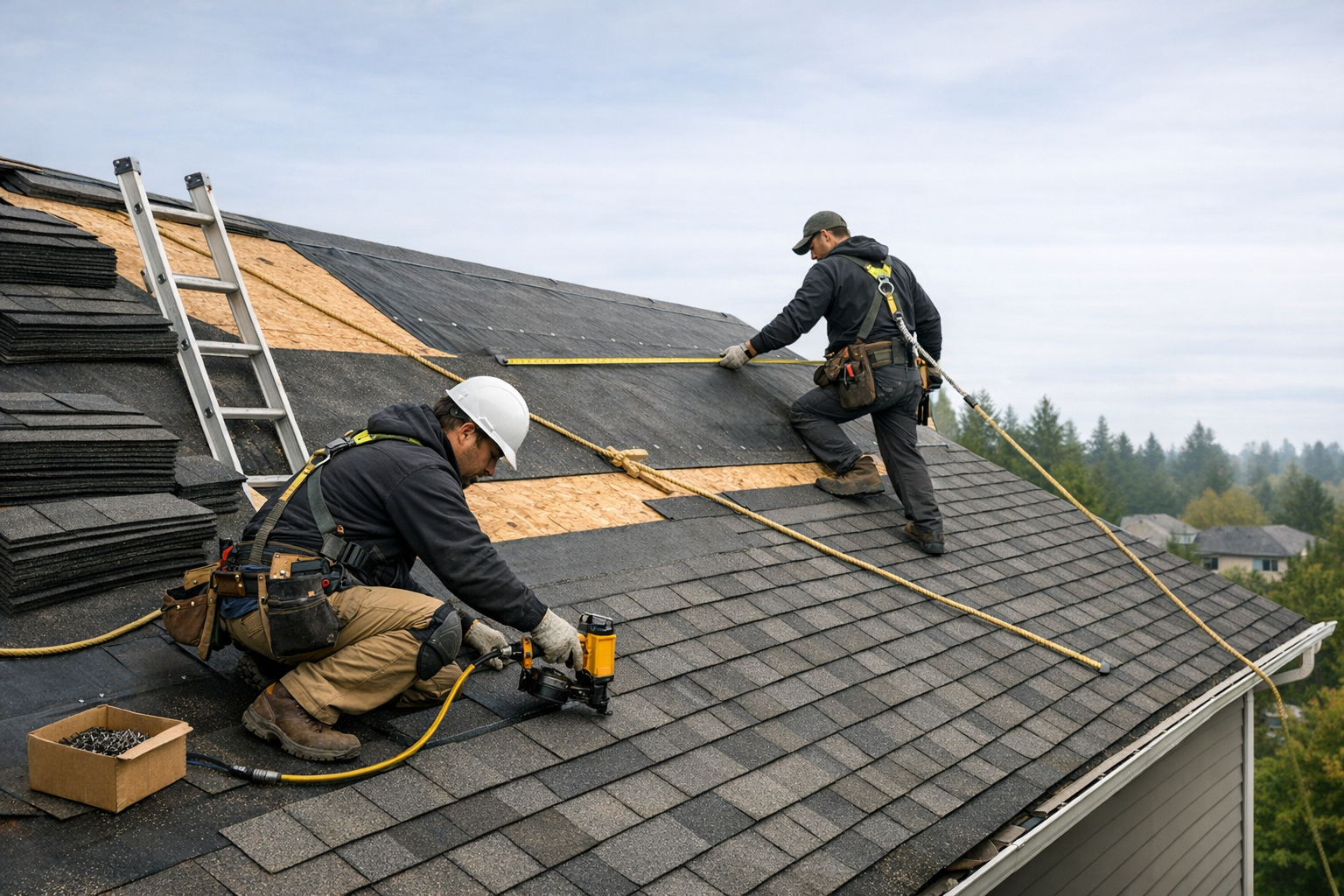
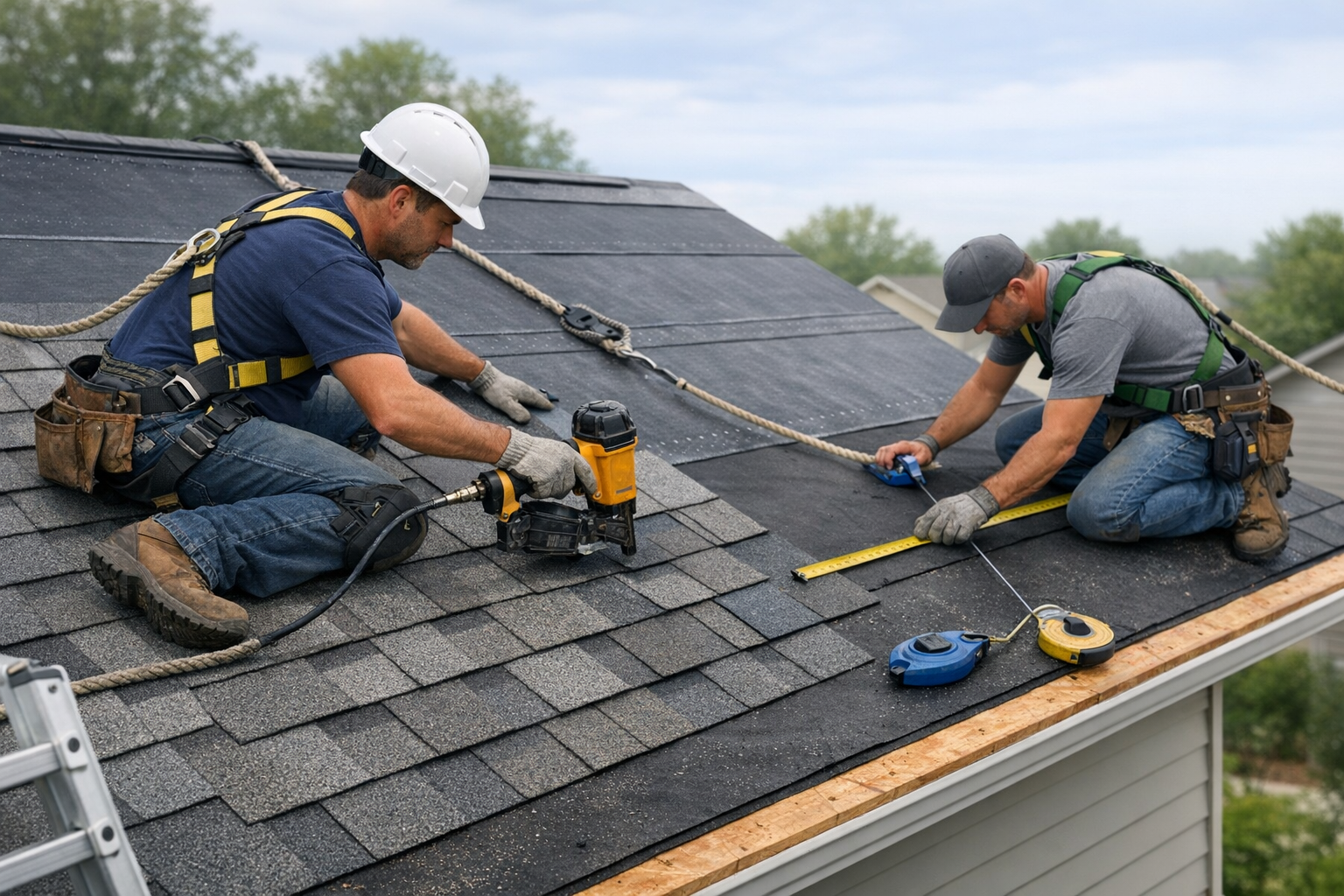
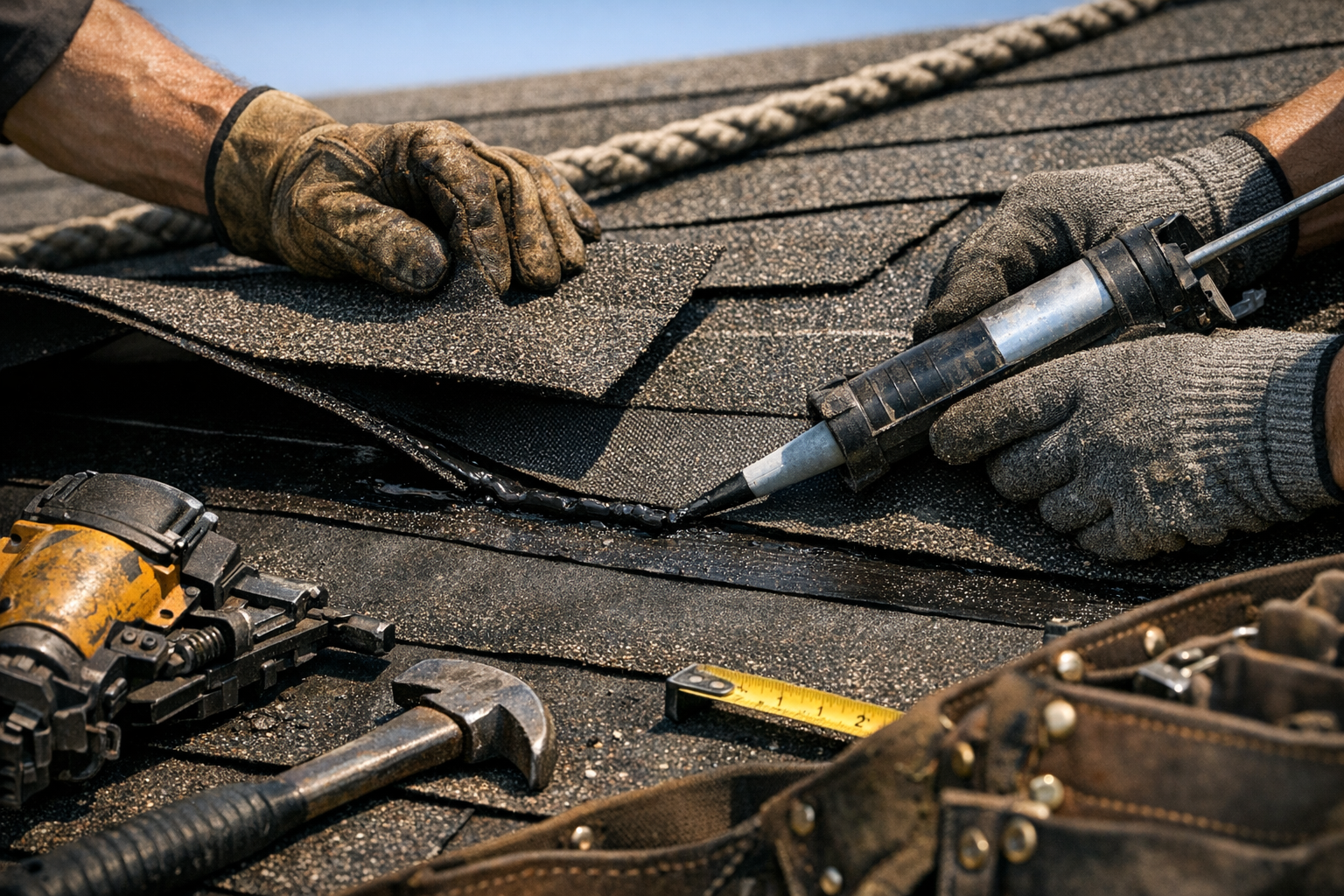
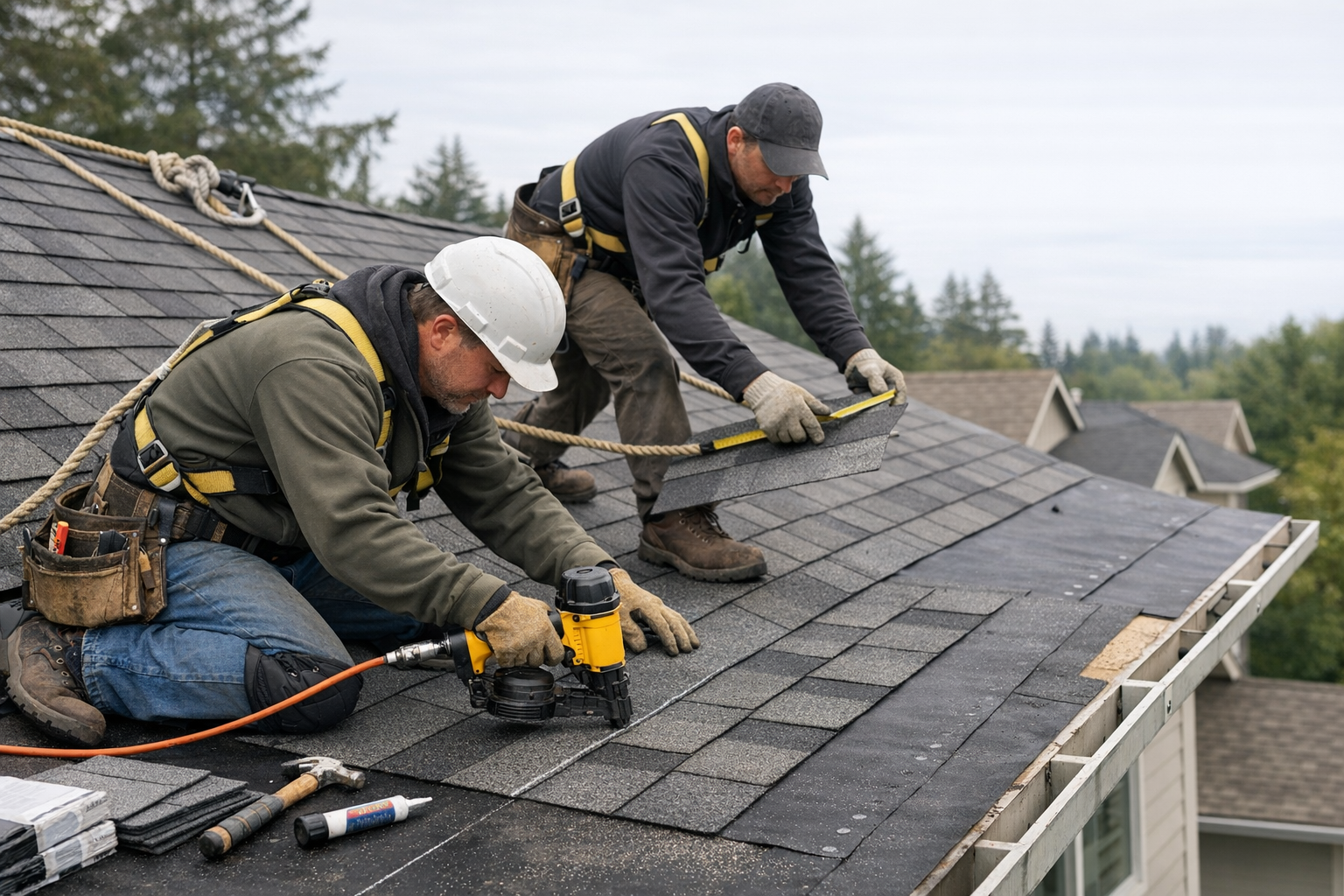
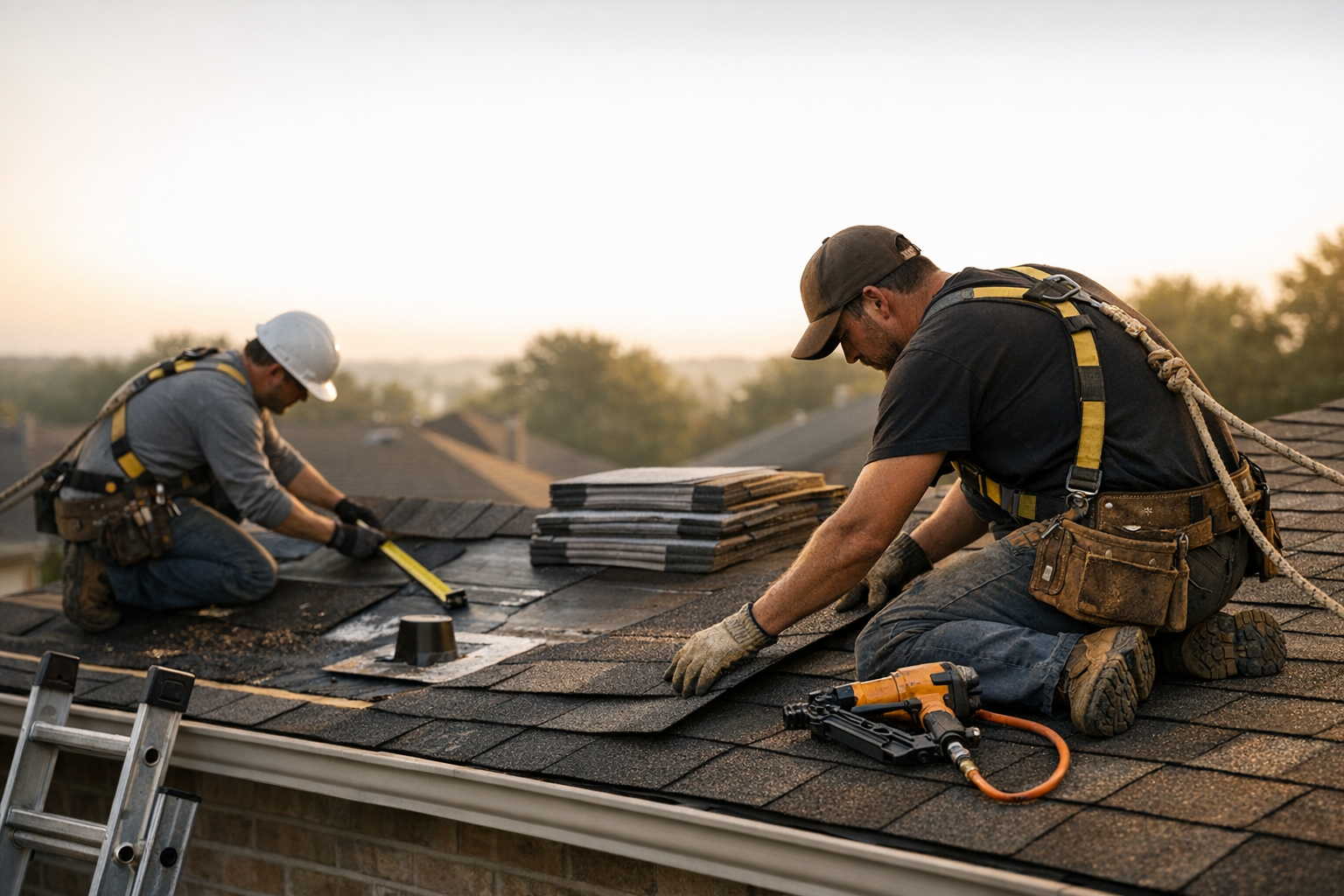
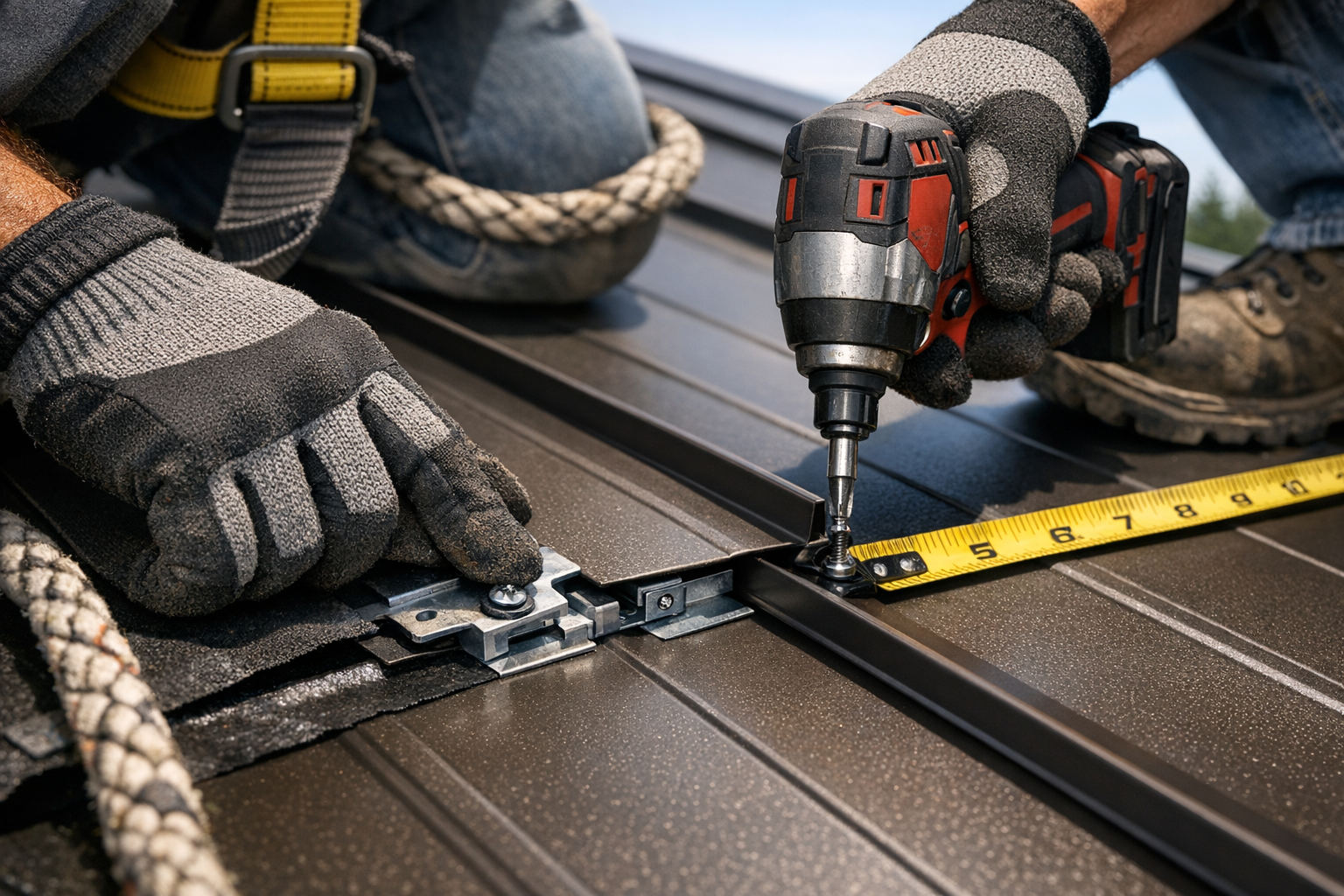
A roof replacement means removing existing roofing materials down to the deck and installing a new roofing system. That includes underlayment, flashing, and the outer material such as shingles, metal panels, or tile.
A roof repair addresses a specific issue, such as replacing damaged shingles or sealing a flashing detail. It does not involve removing the entire roof.
A re-roof or overlay places new shingles over existing ones. While allowed in some cases, many insurers and inspectors prefer full tear-off because it exposes hidden deck damage and ensures proper installation of underlayment and flashing.
Signs you may need a full replacement instead of spot fixes
Common signs include widespread shingle curling, granule loss, multiple leaks, soft decking, or a roof that has reached its expected lifespan. If repairs are scattered across many slopes, it may indicate systemic aging rather than isolated damage.
For example, if you have patched the same area twice in two years, the underlying issue may be broader than that one leak. An inspection can determine whether the structure beneath is compromised.
How insurance carriers, inspectors, and appraisers view roof condition
Insurance companies evaluate roof age, visible wear, and risk exposure. Older roofs often trigger higher premiums or non-renewal letters. Inspectors look for structural integrity and code compliance. Appraisers consider remaining useful life.
If your roof shows advanced wear, even without leaks, it can impact underwriting decisions. That is why documentation matters so much when searching roof replacement near me.
Why “just patch it” can backfire with insurance and future buyers
Temporary repairs can extend life short term, but they may not satisfy underwriting requirements. An insurer may require full replacement within a deadline, not another patch.
Future buyers may also request concessions if they see visible repairs on an aging roof. In many cases, investing in a full replacement restores confidence and simplifies negotiations later.
When Insurance Letters, Leaks, Or Storms Force The Issue
Common triggers: non-renewal letters, inspection failures, active leaks
Many homeowners first search roof replacement near me after receiving a non-renewal notice. Others act after a home inspection flags roof condition. Active leaks are another common trigger.
These events create urgency. The key is to respond with documentation, not panic.
How to read an insurance non-renewal or repair letter without panicking
Start by identifying the compliance date and specific conditions. Is the carrier requesting full replacement or targeted repairs? Do they require photos, invoices, or permits after completion?
Highlight exact language. If the letter is vague, contact the carrier and request clarification in writing. Knowing the precise requirement prevents unnecessary work.
Storm damage vs. age and wear: why the distinction is critical
Storm damage can create a potential claim path. Age-related deterioration typically does not. Mixing the two weakens credibility.
For example, hail impact marks have distinct characteristics compared to uniform granule loss from aging. Accurate identification affects how the project is funded and documented.Understanding the difference between storm-related damage and normal aging is important because insurance coverage often depends on the cause of the damage. The Insurance Information Institute provides educational resources that explain how homeowners insurance policies typically evaluate roof-related claims
How carriers think: underwriting risk, deadlines, and proof requirements
Insurance carriers assess risk. Older or visibly deteriorated roofs represent higher probability of claims. That is why deadlines are firm.
They require proof that risk has been reduced. This usually includes invoices, completion photos, and confirmation of materials used. Understanding this mindset helps you prepare the right documentation from day one.
How To Evaluate Any “Roof Replacement Near Me” Based On Evidence
Why there are effectively two companies: installer and manufacturer
When evaluating roof replacement near me, understand that there is the installer and the manufacturer of the materials. The installer handles workmanship. The manufacturer provides product warranties and specifications.
Both matter. A strong product installed poorly fails. A great installer using subpar materials limits longevity.
The difference between a roofing “price” and a roofing “system”
A price is a number. A system includes underlayment, flashing integration, ventilation strategy, fasteners, and surface material.
For example, two quotes may list architectural shingles. One includes upgraded underlayment and proper valley metal. The other does not. Without comparing system components, you are not comparing fairly.
How to quickly filter out purely sales-driven contractors
Ask for documentation before discussing price in depth. Request sample inspection reports, permit processes, and warranty registration procedures.
If a contractor focuses only on discounts or monthly payments, that is a signal. A proof-driven contractor leads with inspection findings and scope clarity.
The mindset shift: from “Who’s cheapest?” to “Who can prove it?”
The cheapest option often wins in the short term. The best-documented option wins long term.
When you search roof replacement near me, focus on who can clearly explain their recommendations, show evidence of compliance, and provide written documentation at every stage.
The 5 Types Of Proof A Trustworthy Roof Replacement Company Will Show You
1. Proof of licensing, insurance, and local compliance
A reputable contractor should provide active licensing information and proof of liability and workers compensation insurance. They should also explain local permit requirements.
Ask to see documentation. Do not rely on verbal confirmation.Homeowners can also verify contractor licensing requirements and consumer protection guidance through the National National Association of Home Builders, which offers resources related to residential construction standards and best practices.
2. Proof of manufacturer relationships and training
Some contractors complete manufacturer training programs. This can affect warranty eligibility and installation quality.
Ask which materials they recommend and why. Request product documentation, not just brand names.
3. Proof of system design: underlayment, flashing, and ventilation details
A detailed proposal should specify underlayment type, flashing replacement, and ventilation improvements. These are critical to long-term performance.
If these items are missing or vague, ask for clarification in writing.
4. Proof of past performance: recent projects, references, reviews
Look for recent local projects similar to your home style. Photos should show detail, not just distant roof lines.
Online reviews can provide insight, but focus on patterns in feedback rather than star counts alone.
5. Proof of support: warranties, service processes, and follow-up
Ask how warranty registration is handled. Request written workmanship warranty terms.
Also ask about post-installation support. Knowing there is a clear service process provides peace of mind.
Pricing Reality Check — Understanding Roof Replacement Quotes
Line-item clarity: materials, labor, tear-off, disposal, and extras
A thorough quote should separate materials, labor, tear-off, disposal, and optional upgrades. Line-item clarity prevents surprises.
For example, if decking replacement is excluded, that should be clearly stated.
How to spot missing scope that makes a “cheap quote” expensive later
Missing items often include drip edge replacement, flashing upgrades, and ventilation adjustments. These may appear later as change orders.
Review each quote carefully. Ask what is not included.
Square footage, pitch, and complexity: why your neighbor’s price isn’t yours
Roof size, slope, and architectural complexity affect labor and material quantities. A steep roof requires more safety measures and time.
Comparing your quote to a neighbor’s without adjusting for these factors leads to confusion.
When a higher quote is actually the safer, more cost-effective choice
A higher quote may include complete system upgrades, better documentation, and stronger warranties. Over time, that can reduce repair costs and insurance complications.
Evaluate value, not just price.
Next Steps: Moving From Searching “Roof Replacement Near Me” To A Confident Choice
How to use this guide as a checklist when you call contractors
Print or save this guide. Use each section as a checklist. Confirm deadlines. Request inspections. Compare system details.
Structure reduces stress.
One-page summary of what to ask, what to see, and what to keep
Ask for:
- Inspection documentation
- Detailed scope of work
- Licensing and insurance proof
- Written warranty terms
See:
- Photos of existing roof conditions
- Material specifications
- Permit confirmations
Keep:
- Signed contract
- Invoices and payment records
- Completion photos
- Warranty registrations
Organize everything digitally for easy retrieval.
When to move forward now vs. when it’s safe to wait
If you have an active leak, insurance deadline, or inspection contingency, act promptly. If your roof is aging but stable, schedule an inspection and plan proactively.
Timing should be based on evidence, not fear.
How a proof-first approach positions you for fewer surprises and better outcomes
A proof-first approach aligns inspection, documentation, installation, and insurance requirements. It protects resale value and reduces future disputes.
When you search roof replacement near me with a focus on evidence instead of promises, you put yourself in control. That control is what turns an urgent problem into a confident, well-documented solution.
Key Takeaways
- Choosing a “roof replacement near me” should focus on proof—like inspection reports and documentation—instead of sales hype, low prices, or pressure tactics, ensuring you make a confident, evidence-based decision.
- Request clear, detailed documentation at every stage, including licensing, insurance, system design, and past project references, to protect against insurance issues, failed inspections, and resale complications.
- Thoroughly compare roof replacement quotes by analyzing line-item details, system components, and warranty terms; a higher initial price may deliver greater long-term value and fewer costly surprises.
- Respond to urgent triggers—such as leaks, insurance letters, or storm damage—with a structured, documentation-first approach to avoid panic and ensure compliance with insurer and code requirements.
- Using a proof-first checklist when contacting contractors puts you in control, aligns with insurance and resale needs, and transforms a stressful situation into a well-managed, transparent process.
Frequently Asked Questions
1. What should I look for when searching “roof replacement near me”?
Focus on contractors who provide clear documentation—inspection reports, detailed quotes, proof of licensing, and warranty terms—instead of just promises or low prices. This approach ensures you get transparency and quality, not just a quick sales pitch.
2. How is a roof replacement different from a roof repair or re-roof?
Roof replacement involves removing all old materials down to the deck and installing a new roofing system. Roof repair targets specific problem areas, while re-roofing adds new shingles over existing ones, which may not address hidden damage.
3. Why is documentation so important when replacing a roof?
Proper documentation—like inspection reports, permits, and warranty info—protects you with insurance, helps with future home sales, and proves the work meets code. It’s key for long-term peace of mind and avoiding disputes.
4. How can I avoid pressure tactics or misleading quotes from roofing contractors?
Ask for proof before agreeing to any work: request inspection details, breakdowns of what’s included, and evidence of local compliance. A trustworthy roofer welcomes questions and provides clear information, not just discounts or urgency.
5. What are signs I might need a full roof replacement instead of repairs?
Signs include widespread shingle damage, multiple leaks, soft or sagging areas, and an aging roof. If problems are recurring or spread across large areas, a full replacement is often safer and more cost-effective than repeated repairs.
If you are searching for roofing services you can truly trust, do not leave your decision to chance or sales hype. Get clear answers, thorough documentation, and peace of mind from start to finish— schedule a consultation today to take control of your roof replacement or roof repair with a proof-first approach that protects your home and your investment.